
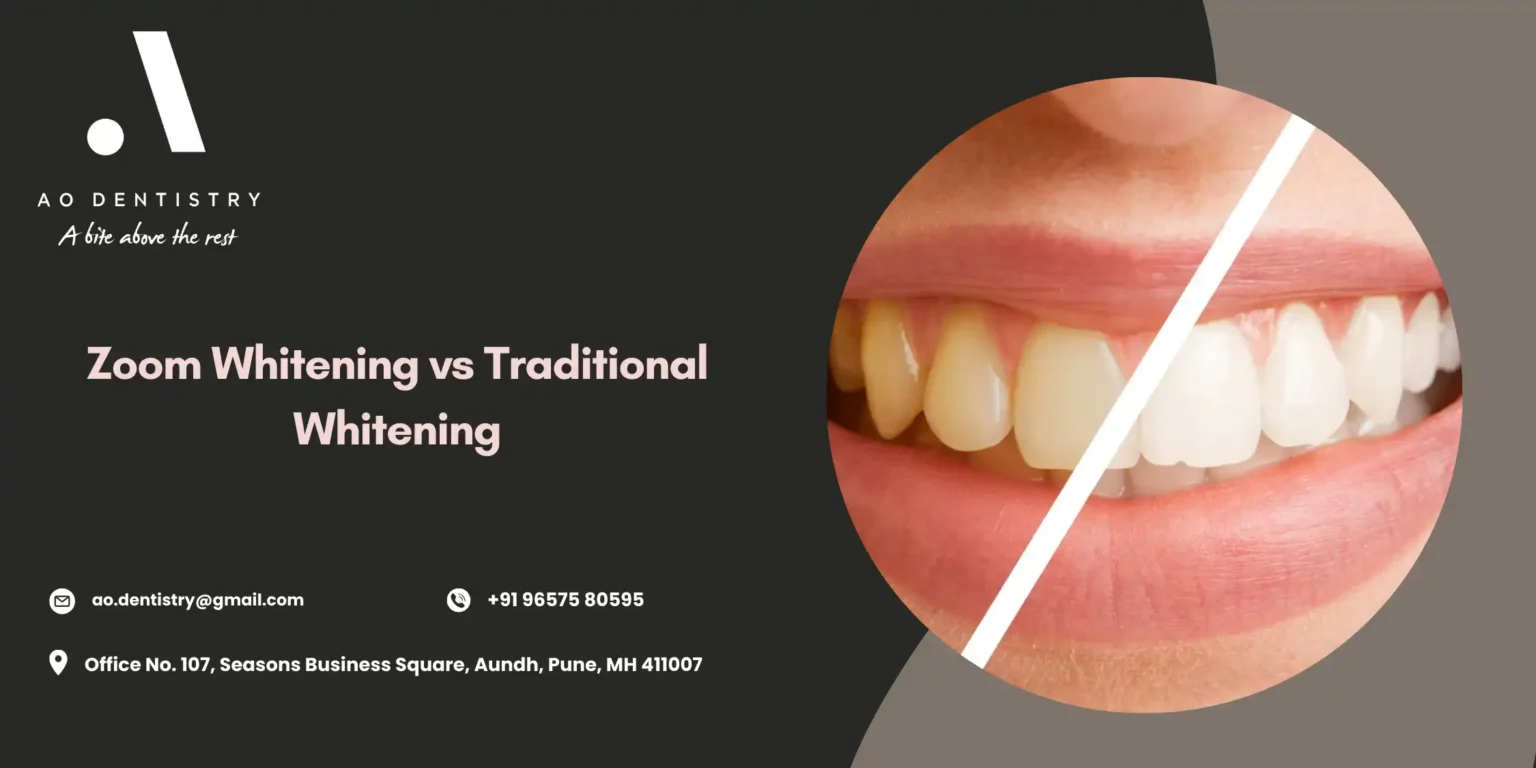
There are multiple options available in the market for teeth whitening. But when you start looking into teeth whitening treatments, the options can confuse patients. Fast professional treatment? Or try something more gradual?
Understanding the difference between Zoom whitening VS traditional whitening methods helps you figure out which approach actually fits you
Want a brighter smile fast? Explore Teeth Whitening in Pune here.
What Is Zoom Whitening?
Philips Zoom uses a two-part system:
A clinical grade whitening gel paired with a blue LED light. The gel has higher concentration of whitening components, which is why it delivers noticeable results
The discoloration in your teeth happens because of chromogens that get stuck into the tooth gaps. They lock in pigments from your daily coffee, tea, or food. Over time, this builds up and causes that yellowed appearance. The Philips Zoom gel breaks down these stain-causing molecules. By activating the whitening gel, the LED light speeds up to remove stains, helping you achieve a whiter smile.
What Is Traditional Whitening?
Store-bought options: This includes whitening strips, trays, gels, and whitening toothpastes. All these products contain weaker bleaching agents meant for regular use over a few weeks. They’re affordable but the results are more gradual and often less noticeable. Professional dentists do not recommend these store bought options as excess use of these can be harmful.
Custom trays from your dentist: Work by having your dentist make a personalized tray that fits your teeth perfectly. This middle-ground option costs more than store-bought strips but less than Zoom, and results show up faster than over-the-counter products.
Professional in-office traditional whitening: Uses stronger bleaching agents than doesn’t use the LED light activation that Zoom does. Results still come faster than home treatments, just not quite as good as Zoom Whitening.
Explore different Types of Crowns for Teeth here.
How to Use Mouthwash. Click here
Safety Concerns and Sensitivity
Sensitivity is what worries people so lets look at it directly
When the bleach is applied to your tooth enamel it opens the tiny pores for some time. That’s what actually causes sensitivity to hot and cold temperature foods. It might feel uncomfortable but it’s not permanent. Its goes away within 24 to 48 hours
Both Zoom whitening and traditional whitening can lead to temporary sensitivity. Zoom might produce more noticeable sensitivity since the treatment is stronger but it goes away easily
How to minimize sensitivity issues:
- Inform your dentist in advance if your teeth are already sensitive.
- Inquire about a fluoride treatment several days before whitening. This helps protect your enamel.
- Use a delicate-bristled toothbrush once the treatment is done.
- Shift over to gentle-care dental paste for some days.
- Avoid very hot or very cold foods and drinks for the first few days
If you already have sensitivity or gum recession, your dentist may suggest traditional whitening or managing sensitivity first.
For healthier gums and long-term care, read Teeth Cleanings and Examination here.
Effectiveness and Whitening Longevity
Degree of shade improvement
Zoom whitening produces immediate, substantial results. Most patients achieve 6 to 8 shades of improvement during that single appointment. The oxidation process continues working for approximately 24 hours afterward, meaning final results appear slightly brighter than what patients observe when leaving the dental chair.
Traditional whitening delivers gradual improvement. Store-bought strips require 2 to 4 weeks before meaningful change becomes visible. Custom trays from dental offices typically show results within 1 to 2 weeks with proper compliance. Total shade improvement can eventually match Zoom outcomes, though the timeline extends considerably longer.
Result duration
Zoom whitening results generally persist for 6 to 12 months. Some patients maintain their brighter shade for up to 2 years. The deeper penetration achieved through professional-strength gel and light activation contributes to this extended longevity.
Traditional whitening typically holds for 3 to 6 months before noticeable regression occurs. Periodic touch-up applications can extend brightness.
Lifestyle factors ultimately determine how long any whitening lasts. Chromogenic substances coffee, tea, red wine, dark berries, tomato-based foods, tobacco deposit new stain molecules onto enamel surfaces. Heavy consumption of these items accelerates discoloration regardless of which whitening method was used initially.
See what’s safe to eat after a Tooth Extraction.
Cost Comparison
Zoom whitening: ₹8000-₹15000 per session
- One appointment
- Immediate results
- Longer-lasting results
Store-bought strips/gels: ₹1000
- Cheapest entry point
- Takes weeks
- Fades faster
- Requires consistency
Custom dentist trays: ₹5000
- Middle ground price
- Takes 1-2 weeks
- Professional-grade materials
- Reusable
Professional in-office traditional: ₹5000 – ₹10000
- Faster than home methods
- Slower than Zoom
- Professional oversight
Pros and Cons
Zoom Whitening Pros:
- Results are immediate and dramatic (6-8 shades lighter in one appointment)
- A professional is overseeing the entire process for safety
- Results last 6 to 12 months or longer
- One appointment, minimal time commitment
- Perfect if you have an event coming up
- The strongest professional whitening available
Zoom Whitening Cons:
- Higher upfront cost
- Possible temporary tooth sensitivity
- Results gradually fade over months
- Not suitable for severe tooth decay, untreated gum disease, or certain dental work
Aftercare and Maintenance
Both Zoom and traditional whitening benefit from smart aftercare.
Right after treatment:
- Wait for 30 minutes before eating or drinking anything
- For the next 24 to 48 hours, skip dark or staining foods or food with high color pigment.
- Avoid tobacco
- Use a soft bristle toothbrush
Long-term:
- Keep using sensitivity toothpaste
- Brush twice-daily and flossing daily
- Touch-up are important every 6 to 12 months
- When drinking staining beverages, use a straw to minimize the direct contact with your teeth
Worried about root canal pain? Read Is RCT Painful.
AO Dentistry’s Whitening Expertise
At AO dentistry your smile matters. Whether you are preparing for a special event or just want to feel more confident in selfies or in conversations, Philips Zoom Teeth Whitening can make the real difference.
Our team looks at your current situation of tooth, the shade, enamel thickness and if any sensitivity you are experiencing and also what results you want accordingly we recommend what will be the right treatment for you.
We also examine your teeth and gums before any whitening, we protect your gum tissue throughout the process, and we give you some tips to manage sensitivity after treatment. We stay updated on the latest whitening techniques because we want you to get the best results possible.
Whether you choose the quick transformation of Zoom whitening or the gradual approach of traditional whitening, our goal is getting you results that match with your teeth goals
Here are a few ways to Stop Grinding Teeth Naturally.
FAQs
Is Zoom whitening better than regular whitening?
It depends on your goals. Zoom whitening is faster and more effective. Traditional is cheaper but if speed is your priority, Zoom whitening wins. If budget matters more, traditional whitening can be the better choice.
What type of teeth whitening is most effective?
Professional Zoom whitening is the strongest option available. A clinical grade whitening gel paired with specialized blue LED light. The gel has higher concentration of whitening components, which is why it delivers noticeably more striking results
Is there anything better than Zoom whitening?
Zoom whitening is the best professional whitening treatment available. Zoom whitening deliver the fastest and the more effective results
How long will Zoom whitening last?
For most people Zoom whitening treatment lasts for 6-12 months, some people with good dental habit maintain the results for around 2 years
Who should not get Zoom whitening?
If you have any untreated cavities, active gum disease, severely sensitive teeth or existing crown or veneer on your front teeth, zoom whitening might not be the right for you. Your dentist can tell you if you are the right candidate.
Do teeth keep whitening after zoom?
Yes for about 24 hours after your appointment the bleaching process continues. After that your shade stabilizes. Then over the following months your teeth gradually darken at normal rate