
International patients now travel to India for dental treatment in growing numbers. The main draw is saving 60 to 80 percent on higher-value work like implants and full-mouth rehabilitation, with globally trained dentists. The trend has accelerated into 2026 as fees and waiting times abroad keep climbing.
Trusting a clinic far from home is a fair worry, so the careful traveller weighs more than price. Quality, dentist credentials, and follow-up care matter as much as the bill. For higher-value treatment, the savings can justify the trip, provided the clinic checks out.
The 2026 Trend: Why Dental Tourism to India Keeps Growing
India is now one of the world’s busiest dental tourism destinations. Most patients come from the US, UK, Australia, and the Middle East, drawn by lower cost, short waits, and internationally standard clinics. Demand has climbed into 2026 as the gap with Western dentistry has widened.
A few forces explain why now:
- Private dental fees in the US, UK, and Australia keep climbing, and public systems carry long waits for anything non-urgent, which pushes patients to look outward.
- A favourable exchange rate stretches a foreign patient’s budget much further in India, so a fixed amount buys more treatment than it would at home.
- More Indian clinics now run fully digital workflows and publish their dentists’ credentials online, which lowers the trust barrier for someone choosing from another country.
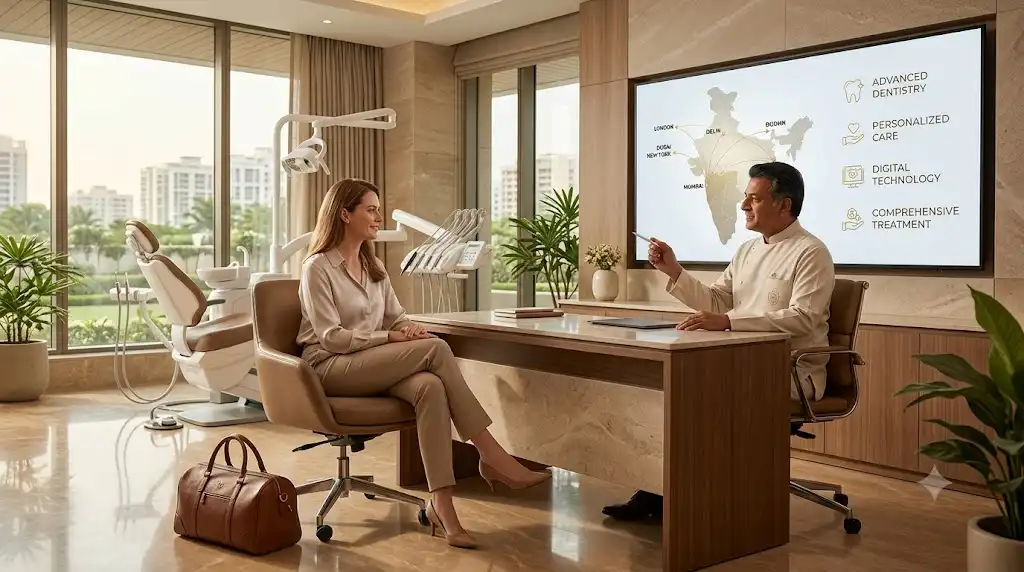
- Video consultations let a patient see the dentist, plan the treatment, and price it in full before committing to any flights or time off work.
- Post-pandemic backlogs and rising private insurance costs in several Western countries have left many patients looking abroad for treatment they would otherwise delay.
Together these forces have turned an occasional choice into a planned one. A patient can compare a quote, a clinic’s technology, and its reviews from home. The travel becomes the last step, not the leap of faith it once was.
What Makes Indian Dental Care Competitive on Quality
Cost only matters if the quality holds, and this is where India has closed the gap. Leading clinics run the same equipment and protocols as their Western counterparts. The difference a patient feels is in price and waiting time, not in the standard of care.
None of this is unique to one city. The same standard now appears in clinics across Pune, Mumbai, Hyderabad, and Bangalore, which is what made nationwide dental tourism possible in the first place.
- Many Indian dentists hold postgraduate degrees and have trained or presented abroad, so they follow the same protocols and stay current through international dental bodies.
- Diagnosis is increasingly digital, using CBCT 3D scans and intra-oral scanners that map implants and restorations to the millimetre instead of by estimate.
- Same-visit technology such as CEREC milling and microscope-assisted root canals can compress treatment into fewer appointments, which matters on a short trip.
- Implant and crown materials come from the same internationally certified brands, often CE or FDA cleared, that Western clinics use, not cheaper unbranded substitutes.
- Sterilisation follows recognised infection-control standards, with single-use disposables where appropriate, in line with guidance from bodies such as the FDI and the ADA.
- English is widely spoken in Indian dental settings, so consent, treatment options, and aftercare instructions stay clear from the first consultation onward, which lowers the risk of a treatment misunderstanding.
Treatments Patients Travel For, and What They Cost
Most dental tourism is built around higher-value treatment, where the savings are largest. A scale and polish is rarely worth a flight, but an implant case often is. Typical Indian price ranges vary with materials, case complexity, and the clinic.
- A single dental implant usually runs about Rs 40,000 to Rs 90,000, depending on the implant system and whether bone grafting is needed, quoted separately.
- Full-arch options like All-on-4 or All-on-6 typically range from about Rs 2.5 lakh to Rs 7 lakh per arch, by implant count and prosthesis.
- Zirconia or CEREC crowns commonly cost about Rs 15,000 to Rs 25,000 per unit, with the price moving by material grade and brand.
- Porcelain veneers and smile design run roughly Rs 18,000 to Rs 35,000 per tooth, so the total scales with how many teeth are treated.
- A full course of clear aligners usually falls around Rs 1.5 lakh to Rs 3.5 lakh, depending on case complexity and duration.
Against UK, US, or Australian fees, these ranges run roughly 60 to 80 percent lower by reported estimates, often staying lower even after travel. Cosmetic work can attract GST, while medically necessary treatment is generally exempt. Ask for an itemised quote that names materials and includes imaging.
How to Choose a Clinic Safely Before You Fly
The savings are real, but so is the risk of choosing badly, which most dental tourism advice skips. A rushed plan, an unverified dentist, or no aftercare arrangement can cost more than it saves. A short set of checks removes most of that risk.
- Confirm the treating dentist is named and registered, with verifiable BDS or MDS credentials and a Dental Council registration number you can check on the public register.
- Ask for an itemised written quote and treatment plan, covering imaging, materials, the number of visits, and any likely second-stage costs, before you travel.
- Check that the clinic uses current diagnostics like CBCT, and that it shares its sterilisation protocol and warranty terms in writing.
- Do a video consultation first, so the plan, timeline, and cost are agreed and recorded before any flight or hotel is booked.
- Agree the follow-up plan: the aftercare you may need once home, and how the clinic helps if a restoration needs adjusting later.
Patients increasingly look beyond the obvious metros, and Pune, near Mumbai, has clinics built for this. At AO Dentistry in Aundh, Dr Onkar and Dr Aneesha offer digital diagnostics, single-visit options, and a dedicated international patients pathway. The point is not where you go, but that you can verify it.
Frequently Asked Questions
Is dental treatment in India safe for international patients?
Yes, at reputable clinics that follow recognised sterilisation and infection-control standards. Safety depends far more on the individual clinic than on the country itself. Before booking, verify the treating dentist’s credentials, the brand of materials used, and the clinic’s hygiene protocol, ideally in writing.
How much can I save on dental treatment in India?
Reported industry estimates commonly put savings at 60 to 80 percent versus the UK, US, or Australia. For higher-value work, the total usually stays lower even after flights and accommodation are added. The exact figure depends on the procedure, the materials chosen, and your own travel costs.
Which Indian cities are best for dental tourism?
Mumbai, Delhi NCR, Hyderabad, Bangalore, and Chennai are established hubs, and Pune is a growing option beside the Mumbai corridor. There is no single best city or state for everyone. Choose by clinic quality, dentist credentials, and travel connectivity rather than by the city name alone.
Do Indian dentists speak English?
Yes, English is widely spoken in Indian dental settings. Consultations, consent discussions, and aftercare instructions are normally delivered in English. That keeps communication clear for international patients and lowers the chance of a misunderstanding about the plan. Many clinics also assign an English-speaking coordinator for overseas patients.
How long do I need to stay in India for dental treatment?
Simple work can often be completed in a few days. Implants usually need two trips, or one longer stay, to allow healing between the surgical and restorative stages. A video consultation lets the clinic map your exact timeline before you travel. A spare day before flying home is sensible.
Can I plan and price my treatment before flying?
Yes. Most clinics that treat international patients offer a video consultation and an itemised quote in advance. Agreeing the plan, timeline, and cost before booking travel is the simplest way to avoid surprises after you arrive. Sharing recent X-rays from your home dentist makes the quote more accurate.
What happens with follow-up care after I return home?
Agree this before you travel, not after. Minor adjustments can sometimes be handled by a dentist near you, and a good clinic documents its warranty terms clearly. It should also stay reachable for remote follow-up if a problem comes up later.
Are the dental materials in India the same quality as in the West?
Leading clinics use the same internationally certified implant and crown brands, many of them CE or FDA cleared. The grade within a brand can still vary with budget, so the cheapest quote is not always like for like. Ask for the specific brand and material grade in writing.
Do I need a special visa for dental treatment in India?
Many patients travel on a medical visa, sometimes with a medical-attendant visa for a companion. Visa categories and rules change over time and differ by nationality. Confirm the current requirements with the Indian mission in your country before you plan the trip.
Is dental work in India worth it after travel costs?
For higher-value treatment such as implants, veneers, or full-mouth rehabilitation, the savings usually exceed the cost of travel. For a single cleaning or one small filling, the trip is rarely worth it on cost alone. Combining several treatments into one planned visit improves the value.
About this article
This article was medically reviewed by Dr Aneesha of AO Dentistry, Aundh, Pune. Clinical-standard points draw on the FDI World Dental Federation and WHO Oral Health guidance.
Conflict of interest: AO Dentistry is a dental practice and the publisher of this article. This content is editorial and is not sponsored. It is general information, not a substitute for an in-person dental examination and an individualised quote.