

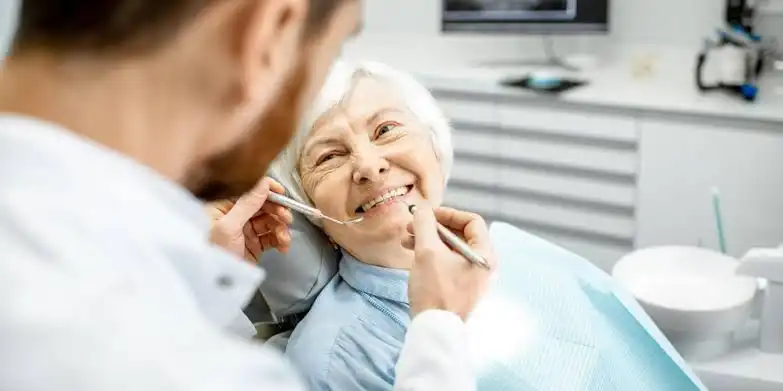
Sensitive teeth become more common with age. Many older adults put up with the twinge instead of facing a dentist they fear will involve a drill or needle. The good news is that most sensitivity in seniors is treatable with gentle, low-pain options. Several need no drilling at all.
These are the treatments people picture when they search for “painless” dentistry. In honest terms they are comfort-focused and low-pain, not a promise of zero sensation. The aim for most seniors is simple: keep your natural teeth and stay comfortable.
Why Teeth Get More Sensitive With Age
Sensitivity is not simply a part of getting older that you must accept. It usually has a specific, treatable cause, and in seniors a few causes dominate. Most trace back to either exposed tooth roots or reduced saliva.
- Receding gums. As gums recede, they expose the tooth root, which has no protective enamel and feels temperature and touch sharply.
- Dry mouth from medication. Many common senior medicines reduce saliva, and saliva normally protects teeth, so less of it means more sensitivity and decay.
- Root decay. Exposed roots soften and decay more easily than enamel, and that decay often shows up first as sensitivity.
- Worn enamel. Decades of brushing, grinding, and acidic food thin the enamel, bringing the nerve closer to hot and cold.
- Gum disease. Inflamed gums (periodontitis) pull away from teeth and leave roots exposed, which a professional cleaning helps control.
- Cracked teeth or aging fillings. Old restorations and hairline cracks let stimuli reach the nerve, often as a sharp jolt when biting.
Did you know? Dry mouth is one of the most overlooked causes of sensitivity in older adults. According to the American Dental Association, it affects around 30 percent of people over 65, and up to 40 percent over 80, mostly as a side effect of everyday medications. The more daily prescriptions you take, the higher the risk.
Comfort-Focused Treatments a Dentist Can Offer
Several in-clinic treatments calm sensitivity quickly, and most are gentle enough for an anxious or older patient. The right one depends on the cause, which is why a dentist checks first. The main options work in different ways.
| Treatment | How it works | Why it suits seniors |
| Desensitising varnish or gel | A fluoride or resin agent is painted on to seal the tiny tubules that carry sensation to the nerve | Quick, needle-free, and repeatable; eases sensitivity in minutes |
| Silver diamine fluoride (SDF) | A liquid brushed on that hardens softened tooth and calms sensitivity, with no drilling | FDA-cleared for sensitivity, ideal if the drill or decay is the worry |
| Bonding over roots | A tooth-coloured resin covers an exposed, sensitive root surface | No drilling for many cases; protects roots bared by gum recession |
| Laser desensitisation | A dental laser seals exposed tubules and calms the nerve ending | Often needle-free and vibration-free, which suits dental anxiety |
| Fluoride application | Concentrated fluoride strengthens enamel and reduces the nerve response | Simple, fast, and low-cost as a first step |
These calm the symptom, but the cause still matters. If decay has gone deep or a tooth is cracked, a dentist may need to do more, such as a filling or a root canal, to settle it. A short examination with imaging tells you which group you are in.
Expert tip: If you have both early decay and sensitivity and you dread the drill, ask your dentist whether silver diamine fluoride suits you. It is brushed on in minutes, needs no injection, and can arrest decay while easing sensitivity. The one honest trade-off is that it darkens the treated spot, so it is used carefully on front teeth.
Gentle Care You Can Do at Home
Day-to-day habits do a lot of the work between dental visits. A gentle routine calms mild sensitivity and protects what the dentist treats.
- Switch to a soft brush and a light touch. Brush at a 45-degree angle to the gums, since hard scrubbing wears enamel and worsens recession.
- Use a desensitising toothpaste daily. Ingredients like potassium nitrate calm the nerve over a few weeks, so give it time rather than expecting an overnight change.
- Add a fluoride rinse. A daily fluoride mouthwash strengthens enamel and exposed roots against both decay and sensitivity.
- Manage dry mouth. Sip water through the day, use sugar-free lozenges or a saliva substitute, and ask your doctor whether a medication can be adjusted.
- Ease off acids. Cut back on citrus, soda, and wine, and wait a while before brushing after them, because acid softens enamel temporarily.
You must consider this: Home care manages mild, general sensitivity well, but it cannot fix a cavity, a cracked tooth, or a receding gum line. If the pain is sharp, sticks to one tooth, lingers after the cold is gone, or comes with a dark spot, get it examined. Waiting usually means a bigger, less gentle treatment later.
Myths About Senior Tooth Sensitivity
The most damaging myth is that sensitive teeth are just part of ageing and nothing can be done about them. In reality, sensitivity has causes that respond to treatment, and ignoring it lets a problem like root decay quietly progress. Naming the cause is the first step to calming it.
A second myth is that a sensitive tooth means a root canal or an extraction is coming. For most sensitivity, that is not the case. Non-surgical, conservative care is the first-line approach, and the gentler options usually come before anything bigger.
A third myth keeps people away: that an anxious patient simply has to endure it. Modern practice is built around comfort, from numbing gels to slower, fully explained appointments. Putting off care because of fear usually trades a small, gentle treatment now for a larger one later.
When to See a Dentist For Dental Treatments Designed for Senior Citizens
Most sensitivity is manageable, but some signs mean it is time for a gentle check, not more toothpaste. Catching the cause early keeps treatment small and comfortable. These are the signs worth acting on.
- Pain that is sharp, lingers after the cold or heat is gone, or wakes you at night.
- Sensitivity fixed to one tooth, especially alongside a dark spot, a hole, or a rough edge.
- Pain when biting down, which can signal a crack or a failing filling.
- Gums that bleed, swell, or have pulled back noticeably from the teeth.
- Sensitivity that has not eased after two to three weeks of careful home care.
Frequently Asked Questions
Is it normal to have sensitive teeth as you get older?
Sensitivity is common with age, but it is not something you simply have to accept. It usually comes from gum recession, dry mouth, or root decay, all of which can be treated. Treating the cause is what brings lasting relief.
Can fluoride help with sensitive teeth?
Yes. Fluoride strengthens enamel and exposed root surfaces and reduces how strongly the nerve responds. Dentists use it as a concentrated varnish in the clinic, and you can add a fluoride rinse at home.
How can I ease sensitive teeth without going to the dentist?
A soft brush, a desensitising toothpaste, a fluoride rinse, and managing dry mouth all help mild cases. Cutting back on acidic food and drink protects enamel too. This will not fix a cavity, a crack, or recession, which need a dentist.
What is the most comfortable option for a senior who fears the drill?
Often a brushed-on agent like silver diamine fluoride, a desensitising varnish, or a laser, all of which are needle-free and quick. A dentist matches the option to the cause, sometimes working under a dental microscope for precision. The point is that avoiding the drill is realistic for many sensitivity problems.
Does dry mouth really cause sensitive teeth?
Yes. Saliva protects and soothes teeth, so when medication or age reduces it, sensitivity and decay risk both rise. Managing dry mouth often eases the sensitivity along with it.
Is silver diamine fluoride safe for older adults?
It is a long-used option that research shows arrests root decay in older adults while easing sensitivity, without drilling or injections. The main downside is that it darkens the treated area. That makes it especially useful on back teeth and exposed roots.
Can sensitive teeth be fixed for good?
Sensitivity can usually be controlled and kept comfortable, though how lasting it is depends on the cause. A sealed root or a treated cavity can settle one tooth for the long term. Ongoing causes like recession and dry mouth need steady, simple upkeep.
Are these treatments expensive in India?
Costs vary by treatment, with simple desensitising care being low-cost and bonding or laser work costing more. Medically necessary dental treatment is generally exempt from GST, while purely cosmetic work may attract it. Ask for an itemised estimate before starting.
Should I see a doctor or a dentist for tooth sensitivity?
A dentist diagnoses the tooth or gum cause and treats it. If your dry mouth is linked to a medication, your doctor may be able to adjust the prescription. For seniors, the two often work well together.
How quickly does relief arrive?
Some in-clinic agents calm sensitivity within minutes of the visit. A desensitising toothpaste works more gradually, over a few weeks of daily use. Pain that persists beyond that, or that is sharp and localised, needs an examination.
About this article
This article was medically reviewed by Dr Aneesha of AO Dentistry, Aundh, Pune. Clinical-standard points draw on the NIH PMC, American Dental Association and WHO Oral Health guidance.
Conflict of interest: AO Dentistry is a dental practice and the publisher of this article. This content is editorial and is not sponsored. It is general information, not a substitute for an in-person dental examination and an individualised quote.