

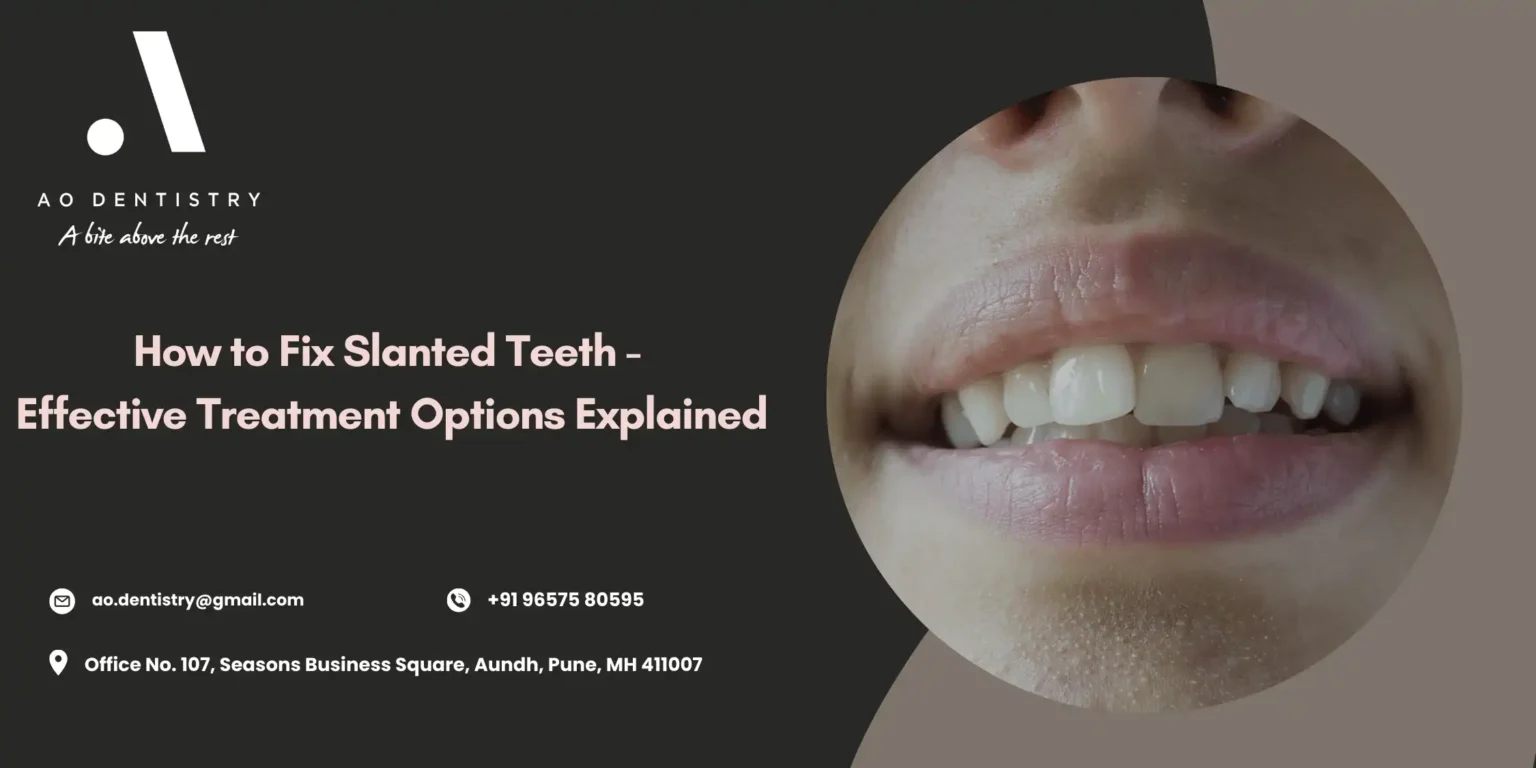
Slanted teeth are incredibly common. One tooth might lean sideways, another could stick out too far, or maybe your whole smile looks crooked. Whatever’s going on in your mouth, you’re probably wondering
Fixing slanted teeth isn’t just about looks anymore. They make proper cleaning tough, create bite problems, and can even cause jaw pain. But here’s some good news fixing them has become so much easier and faster than before.
Click here to learn more about Types of Crowns for Teeth
What Causes Slanted Teeth?
Teeth don’t just decide to grow crooked on their own. Several things push them out of line:
Genetics
Knowing your family history is the first step in learning how to fix slanted teeth. If mom or dad had crowded teeth, chances are you will too. Sometimes you inherit a small jaw from one parent and big teeth from the other that results into crowding right there.
Childhood habits
These early behaviors often determine how to fix slanted teeth later in life.
- Thumb sucking past age five pushes front teeth forward
- Pacifiers used too long create the same pushing effect
- Breathing through your mouth changes how your face grows
- Swallowing with your tongue in the wrong spot gradually moves teeth
Early tooth loss
Baby teeth are supposed to hold space for adult teeth. When they fall out too soon from cavities or injury, other teeth start migrating into that space. Then the permanent tooth has nowhere to go except wherever it can squeeze in. These factors also explain how to fix inward slanting teeth that develop over time.
Adulthood habits
- Grinding teeth at night wears them down unevenly
- Clenching your jaw puts pressure in all the wrong places
- Even how you sleep can gradually shift your bite
- Losing back teeth makes front teeth bear too much chewing load
Click here to read, How to use mouthwash?
Why Should You Fix Slanted Teeth?
Before we explore “how to fix slanted teeth” or “how to fix inward slanting teeth” lets understand why you need to fix slanted teeth
Oral hygiene becomes easier:
Slanted or crooked teeth are difficult to clean as it creates hard to reach areas where plaque starts building up, which increases the risk of cavities or gum disease.
Jaw pain and headaches:
When you get slanted teeth fixed, you often see improvement in jaw pain and headaches. When teeth don’t align properly, your jaw muscles tend to work harder, which results in tension and discomfort
Chewing efficiency:
Chewing becomes a task with slanted teeth. Chewing efficiency increases with straight teeth. Your jaw joints and teeth stop getting stressed from awkward movements.
Want to know if RCT is painful? Read here
Treatment Options for Slanted Teeth
“How to fix slanted teeth?” Modern dentistry offers way more choices than just basic metal braces:
Braces for Slanted Teeth
Traditional braces, also known as metal braces, are one of the most effective methods for complicated cases. These methods use brackets, wires, and also rubber bands to move the teeth into the right position slowly.
Ceramic braces work the same way as traditional braces they use tooth colored brackets instead of metal.
Clear Aligners for Slanted Teeth
Clear Aligners are a complete game-changer. These invisible trays have transformed how people think about straightening teeth:
The whole process starts with either digital scans or old-fashioned impressions. Computer programs map out exactly how teeth need to move during each phase. Then, custom plastic trays get made for every step of the journey.
Why patients love them:
- Nobody can tell you’re wearing anything
- Pop them out for meals and special occasions
- Eat whatever you want without worrying about breaking anything
- Way fewer emergency dental visits
- You can see the treatment plan before starting
Veneers and Crowns for Uneven Teeth
When teeth are basically healthy but just look crooked, porcelain veneers can bring instant results. The dentist removes a super-thin layer from the front of each tooth. Temporary covers protect your teeth till the permanent ones are ready. After a few weeks, the custom veneers are attached permanently.
Perfect situations for veneers:
- Slightly crooked front teeth
- Teeth that are both discolored and misaligned
- Chips or wear that needs fixing
- When you need results immediately
Want to know what the difference is between aligners and braces?
Other Dental Treatments for Slanted Teeth
- Dental bonding uses tooth colored resin material to fill minor gaps, smooth out crooked or chipped edges
- Tooth contouring includes reshaping teeth by removing small amounts of enamel from teeth to round off pointy tips, and fix small overlaps between neighboring teeth
- Jaw surgery may be necessary for complicated cases that may involve jaw misalignment, where orthodontic treatment alone cannot achieve the desired results
- Jaw surgery becomes necessary when the upper and lower jaws don’t match in size, or extreme overbites or underbites that won’t get resolved with braces
Here’s what you can eat after tooth extraction.
How to Stop Grinding Teeth in Sleep Naturally, Read here
Factors Affecting the Right Treatment
Several important considerations influence which approach works best:
Severity of case determines treatment complexity:
- Small gaps or minor rotations are often corrected with clear braces or cosmetic solutions.
- Medium crowding often needs complete braces treatment.
- When misalignment is severe, it may need braces or multiple treatment options together.
Age-related factors:
- Young people often get quicker results because their bones adjust more easily.
- Adult treatment takes longer but achieves equally stable results
Lifestyle considerations play practical roles:
- When appearance is important, clear aligners or ceramic braces are often the right fit.
- Participation in sports activities may influence the most suitable treatment option.
- Social events may affect treatment timing.
Budget planning involves understanding:
- Different treatments may be covered differently by your insurance.
- Many dental clinics offer easy payment plans.
- Each type of treatment can have different long-term results.
Here are a few home remedies for swollen gums
Can You Fix Slanted Teeth Without Braces?
Many patients prefer alternatives to traditional metal braces:
Clear aligner systems provide orthodontic correction without visible hardware. These work effectively for:
- Mild to moderate spacing issues
- Minor rotations and tilting
- Relapse cases after previous orthodontic treatment
Cosmetic dentistry approaches address appearance concerns through:
- Porcelain veneers for front teeth alignment issues
- Dental bonding for minor shape and position corrections
- Strategic crown placement for comprehensive smile makeovers
Want to know the causes of yellow teeth
Maintaining Results After Treatment
Now that you know the answers to all your questions like how to fix slanted teeth or how to fix inward slanting teeth, how to fix slanted jaw. But do not forget, successful treatment doesn’t end when braces come off
Maintaining results after treatment requires:
- Consistent retainer use prevents teeth from gradually shifting back to their original positions. Removable retainers require nightly wear for optimal stability.
- Regular dental checkups allow early detection of any issues. Professional cleanings remove the buildup you miss at home. Retainer adjustments keep everything fitting properly
- Excellent oral hygiene keeps teeth and gums healthy, supporting the lifespan of your treatment.
How to stop tooth decay from spreading? Read this article
FAQs
Q1. How to fix slanted teeth naturally?
Ans. There are no natural methods to move teeth effectively. Excellent oral hygiene prevents worsening, avoiding bad habits helps, but real alignment requires professional help.
Q2. How to fix a tilted tooth?
Ans. Depends how complicated your case is. Mild tilting might respond to aligners or bonding. Serious tilting needs braces with specialized bracket angles and custom wire bends to rotate properly.
Q3. Can I file down my two front teeth?
Ans. Absolutely not. Dentists reshape teeth safely using professional instruments and specific techniques that preserve protective enamel.
Q4. How long does it take to fix slanted teeth with aligners?
Ans. Simple cases finish in 6-12 months. Complex alignment usually takes 12-20 months.
Q5. Are veneers a permanent fix for slanted teeth?
Ans. Veneers last 10-15 years with proper care and provide a long-term cosmetic solution, though they address appearance rather than actual tooth position.
Q6. What is the cheapest way to fix slanted teeth?
Ans. Dental bonding for minor cases offer the most affordable options, though traditional braces often provide the best results for complicated cases.
Q7. Are you ready to take the first step towards the perfect smile?
Ans. Book your appointment today with AO Dentistry at +91 96575 80595.