

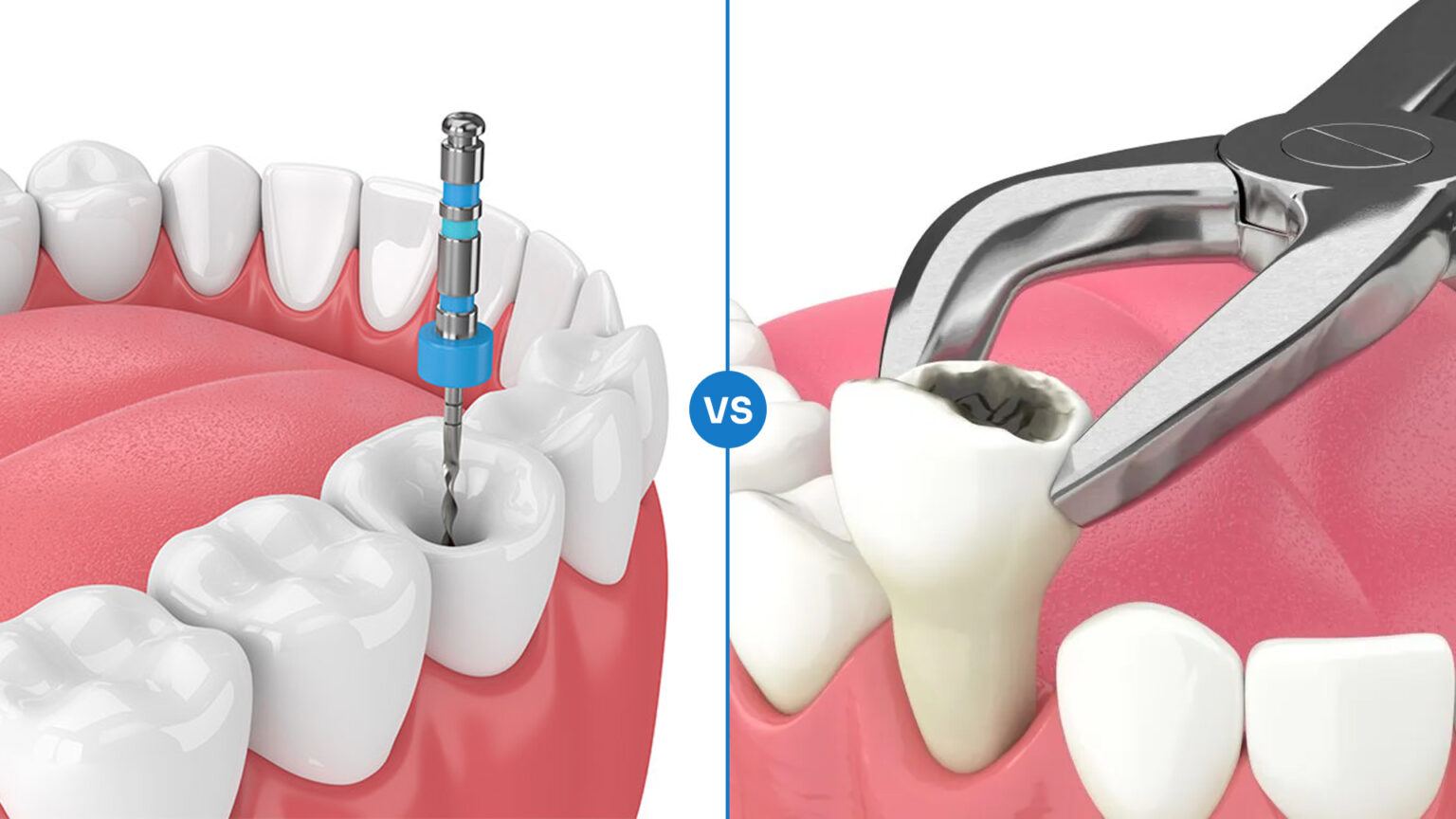
When a tooth becomes severely infected, damaged, or painful, patients are often faced with an important decision — should the tooth be saved with a root canal treatment or removed through tooth extraction?
Both procedures are common dental treatments, but they serve different purposes depending on the condition of the tooth, surrounding gums, bone support, and long-term oral health goals.
Many patients assume extraction is the simpler or cheaper option, while others fear root canal treatment because of outdated myths about pain. In reality, modern dentistry has made both procedures safer, more comfortable, and highly effective.
Understanding the difference between root canal treatment and tooth extraction can help patients make informed decisions that support long-term oral health, functionality, and smile aesthetics.
What Is a Root Canal Treatment?
A root canal treatment is a procedure designed to save a natural tooth that has become infected or severely decayed.
Inside every tooth is soft tissue called dental pulp, which contains nerves and blood vessels. When this pulp becomes infected due to:
- Deep cavities
- Tooth fractures
- Trauma
- Repeated dental procedures
- Severe decay
the infection can spread and cause significant pain and swelling.
During a root canal procedure, the dentist:
- Removes the infected pulp
- Cleans and disinfects the inner canals
- Seals the tooth
- Restores it with a filling or crown
The goal is to preserve the natural tooth while eliminating infection and discomfort.
What Is Tooth Extraction?
Tooth extraction involves completely removing the damaged or infected tooth from the mouth.
Extractions may be recommended when:
- The tooth cannot be restored
- Severe fractures are present
- Extensive decay has destroyed the tooth
- Advanced gum disease has loosened the tooth
- Bone support is severely compromised
- Wisdom teeth are impacted
After extraction, dentists often recommend replacing the missing tooth with:
- Dental implants
- Bridges
- Dentures
This helps prevent future complications caused by missing teeth.
Root Canal vs Tooth Extraction: Main Difference
The biggest difference is simple:
Root Canal
Saves and restores the natural tooth.
Tooth Extraction
Removes the tooth completely.
Whenever possible, dentists generally try to preserve natural teeth because maintaining the original tooth structure supports better oral health and jaw function long term.
However, extraction may sometimes be the healthier option in severely damaged cases.
Benefits of Root Canal Treatment
Root canal therapy is often preferred because it preserves the natural tooth.
1. Maintains Natural Tooth Structure
Saving your original tooth helps maintain proper bite alignment and chewing efficiency.
2. Prevents Tooth Loss
Keeping the tooth avoids gaps that can lead to shifting teeth and bite problems.
3. Better Jawbone Preservation
Natural teeth help stimulate and maintain jawbone density.
4. Natural Appearance
After a crown is placed, the treated tooth often looks and functions like a natural tooth.
5. Long-Term Functionality
With proper care, root canal-treated teeth can last for many years.
Modern root canal procedures are also far more comfortable than many people expect due to advanced anesthesia and digital dental technology.
Benefits of Tooth Extraction
Although preserving teeth is ideal, extraction can sometimes provide the safest and most predictable outcome.
1. Removes Severe Infection Quickly
Extraction completely eliminates the damaged tooth and infected tissue.
2. Suitable for Non-Restorable Teeth
Teeth with major fractures or extensive destruction may not be salvageable.
3. Prevents Infection Spread
In advanced cases, removing the tooth may help protect surrounding teeth and gums.
4. Can Support Future Restorative Solutions
After healing, patients may choose implants or bridges for long-term tooth replacement.
Extractions are often combined with restorative planning to maintain smile aesthetics and oral functionality.
When Is a Root Canal Better?
A root canal is generally preferred when:
- The tooth structure can still be saved
- Infection is limited to the pulp
- Adequate bone support exists
- The tooth is important for chewing or aesthetics
- There are no severe fractures below the gumline
Dentists usually recommend preserving natural teeth whenever possible because it helps maintain oral stability and function.
When Is Extraction Better?
Extraction may be the better option when:
- The tooth is severely cracked
- Bone loss is extensive
- Gum disease has loosened the tooth significantly
- Decay is too advanced
- The tooth cannot support restoration
- Repeated infections continue despite treatment
In such situations, extraction followed by replacement may provide a healthier long-term solution.
Pain and Recovery Comparison
Root Canal Recovery
Most patients experience mild soreness for a few days after treatment. Recovery is generally quick, especially with modern minimally invasive techniques.
Tooth Extraction Recovery
Extraction recovery may involve:
- Swelling
- Bleeding
- Temporary dietary restrictions
- Healing over several days or weeks
Surgical extractions or wisdom tooth removals may require longer healing periods.
Contrary to common myths, modern root canal treatment is usually no more painful than getting a regular filling.
Cost Comparison
Many patients initially consider extraction because it appears less expensive upfront.
However, removing a tooth often creates additional costs later due to the need for:
- Dental implants
- Bridges
- Dentures
- Bone grafting procedures
A root canal combined with a crown may sometimes be more cost-effective long term because it preserves the natural tooth.
The best choice depends not only on immediate cost, but also on long-term oral health and functionality.
Why Replacing Extracted Teeth Matters
If a tooth is extracted and not replaced, several complications can develop over time:
- Jawbone loss
- Teeth shifting
- Bite problems
- Difficulty chewing
- Facial changes
- Increased pressure on nearby teeth
That is why dentists often recommend replacing missing teeth with implants, bridges, or dentures after extraction.
Advanced Dental Technology Improves Both Procedures
Modern dental clinics in Pune and other advanced dental centers now use technologies such as:
- Digital X-rays
- 3D CBCT imaging
- Rotary root canal systems
- Laser dentistry
- Intraoral scanners
- Guided surgical planning
These technologies improve:
- Accuracy
- Comfort
- Treatment speed
- Infection control
- Recovery outcomes
As a result, both root canal treatments and extractions are now more efficient and patient-friendly than before.
Factors Dentists Consider Before Recommending Treatment
Dentists evaluate several important factors before deciding between root canal treatment and extraction:
- Extent of tooth damage
- Infection severity
- Gum health
- Bone support
- Tooth location
- Long-term prognosis
- Patient preferences
- Budget considerations
A detailed clinical examination and digital imaging help determine the safest and most predictable treatment plan.
Why Saving Natural Teeth Is Often Preferred
Most dentists prioritize preserving natural teeth whenever possible because natural teeth:
- Maintain jaw function better
- Preserve bone naturally
- Support bite alignment
- Feel more natural
- Reduce future restorative needs
However, not every tooth can or should be saved. In some cases, extraction followed by implant placement may offer a stronger long-term outcome.
The right choice depends on individual oral health conditions rather than a one-size-fits-all approach.
Final Thoughts
Both root canal treatment and tooth extraction are effective dental procedures, but they serve different purposes depending on the condition of the tooth.
A root canal helps preserve your natural tooth and maintain long-term oral function, while extraction may be necessary for severely damaged or non-restorable teeth.
The best treatment is the one that supports your long-term oral health, comfort, and functionality. Early dental evaluation is important because delaying treatment can allow infection and damage to worsen over time.
With advanced dental technology and experienced specialists available in Pune, patients today can access safer, more comfortable, and highly personalized treatment solutions for both tooth preservation and replacement.
FAQs
1. Is a root canal better than tooth extraction?
A root canal is generally preferred when the tooth can still be saved because it preserves natural tooth structure and oral function. However, extraction may be necessary if the tooth is severely damaged or non-restorable.
2. Is root canal treatment painful?
Modern root canal treatment is usually not painful due to advanced anesthesia and dental technology. Most patients experience only mild soreness after the procedure.
3. When should a tooth be extracted instead of treated?
Extraction may be recommended when there is severe tooth fracture, advanced decay, extensive bone loss, or infection that cannot be effectively treated with root canal therapy.
4. What happens if I do not replace an extracted tooth?
Leaving a gap after extraction can lead to shifting teeth, jawbone loss, bite problems, and chewing difficulties. Dentists often recommend implants, bridges, or dentures for replacement.
5. How long does a root canal-treated tooth last?
With proper oral hygiene and regular dental care, a root canal-treated tooth can last many years or even a lifetime in some cases.
6. Which treatment is more affordable long term?
Although extraction may seem less expensive initially, replacing a missing tooth later can increase overall costs. Saving the natural tooth through root canal treatment is often more beneficial long term when possible.