

Nobody likes going for a dental cleaning. Seriously. You sit there while your dentist scrapes your teeth with metal tools. It sounds awful. Feels worse. Then your mouth hurts for days. So people just skip it. Can’t blame them either.
Let us introduce Guided Biofilm Therapy now. GBT. Instead of all the scraping and metal tools, it does cleaning in a completely different way. Uses spray in simple words. No metal touching your teeth at all.
We started offering GBT at AO Dentistry because honestly it just works way better. The difference between regular cleaning and this is huge. Let’s talk about what’s happening on your teeth and why the guided biofilm therapy approach make huge difference.
Worried about root canal pain? Read Is RCT Painful.
Aligners vs Braces: Which Is the Best Option for Your Smile? Read more here
What is Guided Biofilm Therapy?
Guided Biofilm Therapy is a professional teeth cleaning method that uses EMS Airflow Prophylaxis Master machine. The spray is made of ultrafine powder, water, and compressed air. The powder is called erythritol. It’s safe for your mouth and doesn’t scratch your teeth but it works really well at removing biofilm and stains.
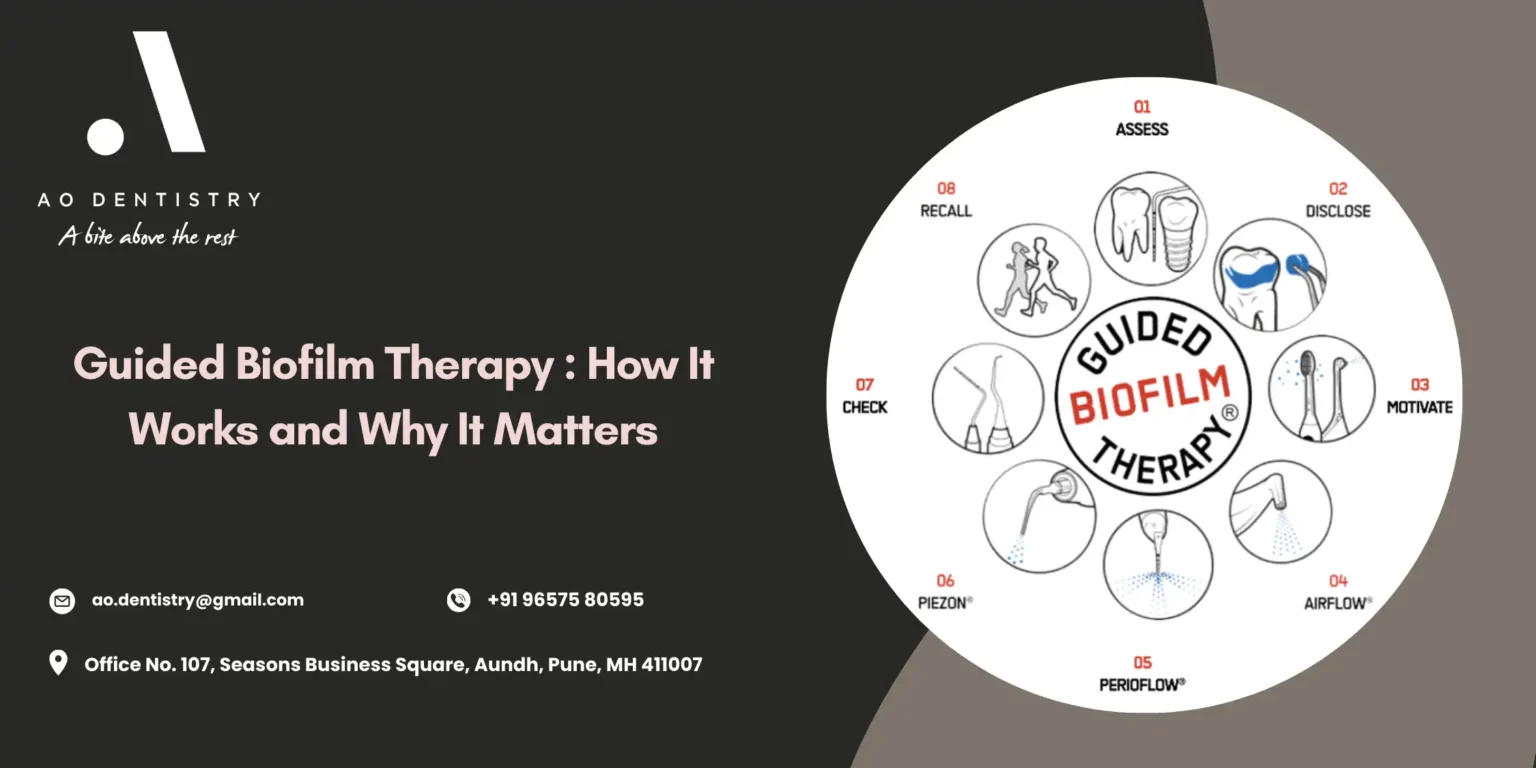
The “guided” part means there’s a specific 8-step protocol that happens the same way every time you come in. It’s not random. Scientists researched this sequence because it works better than traditional scraping methods.
Instead of metal tools digging into your gums causing pain and bleeding, GBT uses this gentle spray to wash away biofilm and tartar. No metal touches your teeth at all. It’s a completely different approach to cleaning.
Here are a few home remedies for swollen gums
How Guided Biofilm Therapy Works
Here’s the actual steps:
Biofilm Detection
Your treatment begins with a harmless dye being brushed onto your teeth. This dye sticks to biofilm and turns it pink or purple. Now you can see where the bacteria are living. Usually it’s in places where you thought you were brushing fine. It shows you exactly where you’re missing when you brush.
Patient Education
Once the biofilm is visible, it tells a clear story about your oral hygiene habits. Tell you where your toothbrush isn’t reaching. Our team educates you about where your floss isn’t going. Which areas you completely miss. What specifically needs to change in how you brush and floss at home.
Airflow Prophylaxis
Airflow spray gets applied all over your teeth. Every spot. The front, the back, the chewing surfaces, between teeth. The sensation is gentle and refreshing, unlike the jarring vibrations of traditional ultrasonic scalers.
Periodontal Maintenance
If you have gum disease or your gums are swollen, there’s a special nozzle called Perioflow. It sprays below your gum line where bacteria are hiding in pockets under the tissue. It cleans out the infection without cutting or damaging tissue. Regular deep cleaning can actually hurt your gums but GBT doesn’t.
Calculus Removal
Sometimes tartar is so calcified that the spray can’t fully get it off. When that happens they use something called Piezon ultrasonic. It vibrates to break apart the tartar. Not the same as older ultrasonic scalers. Way more gentle overall.
Verification
Our team looks at every tooth and checks below your gums to make sure it’s actually all clean. If they spot something that was missed they fix it right then. Not rushing through this part.
Fluoride Application
Fluoride is applied at last. It makes your enamel harder and stronger. It can also reverse really early cavities before they actually turn into real cavities. This protection lasts for several months.
Personalized Maintenance Plan
Before you leave we discuss when to come back. Some people need to come back in 3 months. Some people can wait 6 months or longer. Depends on how fast biofilm builds up in your specific mouth and if you have gum disease or other issues.
Explore different Types of Crowns for Teeth here.
Key Benefits of Guided Biofilm Therapy
The advantages of GBT cleaning go far beyond comfort, though that’s certainly a major benefit:
It doesn’t hurt during cleaning: No scraping means no sharp pain. Your gums don’t bleed during the appointment. You’re not sitting there stressed out the whole time.
No pain after either: Your teeth won’t be sore after treatment. Most people have zero sensitivity afterward.
Your gums don’t get torn up: When tissue doesn’t get damaged, you bleed less during cleaning and less when you brush at home later. Your gums don’t shrink back as fast over your lifetime.
Actually cleans everywhere: The spray reaches between your teeth, under your gums, around any dental work you have. Everything gets clean.
Teeth look whiter: All those stains from coffee and tea and red wine just wash away. Your teeth look brighter without needing whitening treatments.
You get fewer cavities: When biofilm is actually removed thoroughly and regularly, bacteria can’t make as much acid. Less acid equals fewer cavities. That’s it.
Works for basically anyone: Kids are fine with it. Adults with lots of dental work like it. Teenagers with braces prefer it. People with sensitive gums definitely like it.
Appointments are faster: Most take 30 to 60 minutes. Since you’re comfortable the whole time it goes by way faster than regular cleaning.
See what’s safe to eat after a Tooth Extraction.
Guided Biofilm Therapy Procedure: Step by Step
A typical GBT session takes about 30 to 60 minutes depending on how much buildup you have and whether your gums need extra attention. Here’s exactly what happens during your appointment:
Stage One: Biofilm Detection with Disclosure They put a dye on your teeth. The dye sticks to biofilm and turns it pink or purple. Now you can see where the bacteria are living. Usually it’s in places where you thought you were brushing fine. It shows you exactly where you’re missing when you brush. This visualization is the first step because it helps you understand what needs to change.
Stage Two: Patient Education and Assessment Your dentist points out those stained spots. They tell you where your toothbrush isn’t reaching. Where your floss isn’t going. Which areas you completely miss. What specifically needs to change in how you brush and floss at home. This isn’t criticism. It’s practical guidance so you can improve your routine.
Stage Three: Biofilm Removal with Airflow Technology The EMS Airflow spray gets applied all over your teeth. Every spot. The front, the back, the chewing surfaces, between teeth. It doesn’t feel like regular ultrasonic cleaning at all. It’s gentle. Kind of refreshing actually. No vibrations or jarring sensations. The spray physically washes away biofilm and stains without any metal touching your teeth.
Stage Four: Deep Cleaning with Ultrasonic Devices If you have gum disease or your gums are swollen, a special nozzle called Perioflow sprays below your gum line where bacteria are hiding in pockets under the tissue. It cleans out the infection without cutting or damaging tissue. Regular deep cleaning can actually hurt your gums. This doesn’t. Sometimes stubborn tartar is so calcified that spray can’t fully remove it. When that happens they use something called Piezon ultrasonic. It vibrates to break apart the tartar. Not the same as older ultrasonic scalers. Way more gentle overall.
Stage Five: Thorough Verification Your dentist looks at every tooth and checks below your gums to make sure it’s actually all clean. If they spot something that was missed they fix it right then. Not rushing through this part. This quality control step ensures nothing gets left behind.
Stage Six: Final Polishing and Fluoride Protection Fluoride is applied last. It makes your enamel harder and stronger. It can also reverse really early cavities before they actually turn into real cavities. This protection lasts for several months. The final polishing gives your teeth that clean, smooth feeling.
Stage Seven: Personalized Maintenance Scheduling Before you leave you talk about when to come back. Some people need to come back in 3 months. Some people can wait 6 months or longer. Depends on how fast biofilm builds up in your specific mouth and if you have gum disease or other issues. Your dentist will recommend what makes sense for you.
Total Appointment Duration: 30 to 60 minutes Most GBT appointments finish within this timeframe. Because the procedure is painless and comfortable, the time goes by faster than traditional cleaning appointments. You’re not sitting there stressed out like you would be with scraping and metal tools.
Here are a few ways to Stop Grinding Teeth Naturally.
Who Can Benefit from GBT?
Different types of patients benefit:
- Kids and teenagers handle it really well. Nothing looks scary or intimidating. Teenagers with orthodontic braces get way better cleaning around all the brackets and wires compared to regular cleaning.
- Adults who want to keep their teeth healthy get better plaque removal than regular scaling. Better protection long-term.
- People who have implants or crowns or bridges can get GBT without any risk of damaging their dental work.
- Anyone whose teeth get sensitive or whose gums bleed easily notice an immediate huge difference in how comfortable it is.
- People dealing with gum disease benefit a ton. The Perioflow attachment can handle active disease way more gently than traditional deep cleaning.
Factors That Influence Results
How well GBT works depends on several things:
- Your daily oral hygiene routine – Brushing twice daily and flossing consistently slows biofilm reaccumulation between appointments. Poor home care means buildup returns faster.
- Frequency of dental visits – Three-month intervals maintain better results than six-month gaps. Regular visits prevent biofilm from hardening into tartar again.
- Severity of plaque and tartar buildup – Patients with heavy accumulation may need longer appointments. The starting point affects how quickly you see improvement.
- Diet and eating habits – High sugar consumption accelerates bacterial growth and biofilm formation. Frequent snacking feeds bacteria throughout the day.
- Tobacco use – Smoking dramatically increases biofilm buildup and damages gum tissue. Tobacco users typically need more frequent cleanings.
- Existing gum disease – Active periodontal disease may require closer monitoring initially. Baseline gum health affects appointment intervals.
Find out common Yellow Teeth Causes and fixes.
Guided Biofilm Therapy vs Traditional Cleaning
| What We’re Comparing | GBT | Traditional Cleaning |
| Feel | Comfortable | Usually uncomfortable and painful |
| Tools | Powder water spray | Metal scrapers and ultrasonic vibration |
| What happens to gums | Barely any damage | Bleeding happens a lot |
| How long | Everywhere including tight spots | Misses some areas between teeth |
| After the appointment | 30-60 minutes | 45-90 minutes usually |
| Stain removal | Almost no sensitivity | Sore for 1-2 days normally |
Stop cavities early with these Tooth Decay tips. Click here.
Aftercare and Maintenance Tips
The appointment gets things started. What you do after determines if the benefits stick around.
Right when you leave: Don’t eat or drink for about 30 minutes so the fluoride can set on your teeth properly. Don’t have dark colored stuff for the rest of that day coffee, red wine, dark berries. You can brush and floss that night like normal.
Every day: Brush twice a day with fluoride toothpaste. Floss every day using whatever works for you. Use antimicrobial mouthwash if your dentist says to. Drink lots of water.
Going forward: Most people do well coming back every 3 to 6 months. Your specific timing depends on how much biofilm your mouth naturally builds and how your gums are doing. Your dentist will tell you what interval makes sense for you.
How to Use Mouthwash. Click here
FAQs
Q1. What is guided biofilm therapy?
Ans. Professional cleaning using spray with powder and water instead of metal scrapers to clean your teeth and remove stains.
Q2. What are the steps involved in guided biofilm therapy?
Ans. Biofilm gets stained so you can see it, dentist shows you your brushing gaps, spray cleans all your teeth surfaces, special spray cleans below your gums if needed, ultrasonic removes tartar that spray can’t get, dentist checks everything is clean, fluoride gets applied, your next appointment gets scheduled.
Q3. What are the benefits of guided biofilm therapy?
Ans. GBT removes the discomfort during your cleaning, does not bleed your gum and leaves teeth visibly brighter. It reaches areas standard tools can’t, which significantly lowers your cavity risk while causing zero sensitivity afterward.
Q4. How long does guided biofilm therapy take?
Ans. Most appointments last 30min to 1 hour depending on your dental situation. The procedure moves quickly since there’s no pain involved in this procedure.
Q5. Is guided biofilm therapy worth it?
Ans. The higher cost makes sense when you consider the specialized equipment and expertise involved. You’re getting a cleaning that actually prevents cavities and gum disease rather than just removing surface stains. Investing now beats dealing with expensive dental work later.
Q6. Can Guided Biofilm Therapy be used for braces or implants?
Ans. Completely safe for both. Actually ideal for orthodontic braces, spray cleans around brackets and wires far better than traditional instruments. Won’t damage implants or dental restorations.