

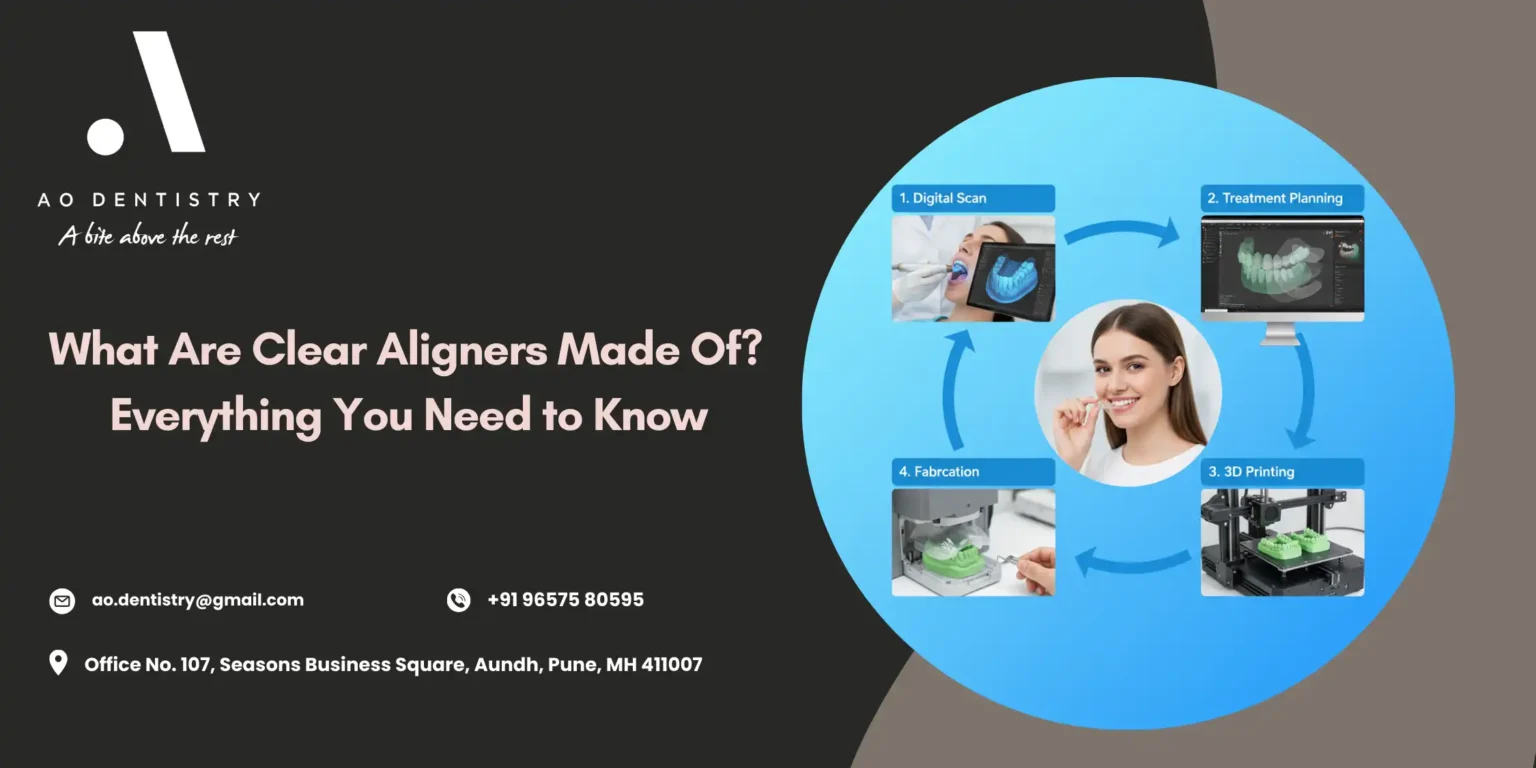
Clear aligners have transformed the way orthodontics is practiced, offering patients an invisible and comfortable way to straighten their teeth. As more people research the convenience and aesthetic appeal of clear aligners, many questions
Understanding the materials used in these aligners helps patients make the right decisions for their smile
The success of clear aligner treatment depends on the materials used during manufacturing. The material must be safe, durable for long-term use, and effective and help teeth move gradually into proper alignment.
Click here to learn more about Types of Crowns for Teeth
Introduction to Clear Aligners
Before we move on to what are clear aligners made of? Or what are invisalign aligners made of? Clear aligners are customized, removable dental tools designed to straighten teeth slowly. Different from metal brackets and wires, aligners are transparent plastic trays that fit over your teeth.
Patients wear each set of aligners for about two weeks before and then move on to the next set.
People prefer clear aligners over traditional braces for several reasons:
- Nearly invisible appearance
- Can be removed for eating and cleaning
- More comfortable than metal braces
- Fewer dental visits required
- No dietary restrictions
How to use mouthwash? Read here.
Materials Used in Clear Aligners
Creating clear aligners that actually work takes some pretty clever engineering. These aren’t made from the same plastic as water bottles or food containers. So what are clear aligners made of exactly? Or what are Invisalign aligners made of Or what are aligners made of
Thermoplastic Polymers: Thermoplastics are flexible and moldable when heated, which allows for the creation of exact impressions that match the patient’s unique tooth shapes and structure. Once cooled, they maintain their shape.
This answers part of what are clear aligners made of or what are invisalign aligners made of
Medical-Grade Resins: Advanced polyurethane material gives aligners their crucial properties. They’re designed to stay durable, even with nonstop exposure to saliva, food particles, and the bacteria that live in your mouth.
BPA-Free Compositions: New orthodontic materials are designed to keep your smile safe by removing BPA. It helps protect patients from chemicals that could interfere with hormones, without compromising the strength needed for treatment
Want to know if RCT is painful?
Why These Materials Are Safe and Effective
Before materials are approved for long-term use in the mouth, they’re tested to make sure they’re safe and effective.
Biocompatibility: Understanding what are clear aligners made of OR what are invisalign aligners made of helps patients feel confident. The material in clear aligners is biocompatible, so it’s safe for your mouth and doesn’t cause harmful reactions with oral tissues. This biocompatibility makes aligners comfortable to wear and lowers the chance of allergies.
Critical Performance Characteristics:
Successful aligner materials must juggle multiple demanding requirements:
- Generate adequate orthodontic forces without tissue damage
- Maintain flexibility during insertion while resisting breakage
- Stay chemically inert despite constant saliva exposure
- Preserve optical clarity throughout the entire treatment period
- Hold dimensional accuracy under varying oral conditions
FDA Approval:
Knowing what are clear aligners made of or what are invisalign aligners made of matters for safety reasons. Clear aligner materials receive FDA clearance, which confirms their safety for extended oral use. This regulatory approval provides patients with confidence in the treatment they have selected.
Want to know what the difference is between aligners and braces?
Invisalign Aligners Material Explained
Invisalign, the pioneer of clear aligner technology, uses a special material called SmartTrack. This shows what are clear aligners made of or what are invisalign aligners made of can vary by brand. SmartTrack thermoplastic material offers several advantages:
SmartTrack addresses several practical challenges:
- Easier insertion and removal process
- Superior retention that prevents aligners from loosening
- More predictable force delivery throughout each wear cycle
- More comfort that reduces common pressure complaints
Clinical data reveal SmartTrack provides better control over challenging orthodontic movements, especially tooth rotations and root positioning that historically required extended treatment times.
Here’s what you can eat after tooth extraction.
How to Stop Grinding Teeth in Sleep Naturally, Read this article.
Benefits of High-Quality Aligner Material
What are clear aligners made of or what are invisalign aligners made of directly affects your comfort. Material quality of the aligners directly impacts treatment success. Choosing inferior materials might save you money, but can create problems in the future, and also extend treatment duration
Comfort Factors:
Good quality material addresses the most common patient problems:
- Accurately manufactured edges remove the problem of tissue irritation
- Optimal thickness prevents a bulky feel
- Appropriate stiffness reduces insertion effort
- A good fit minimizes speech interference
Sustained Optical Performance:
Good quality materials maintain the clarity from start to finish. Lower quality material alternatives create discoloration within days, making aligners increasingly noticeable.
Reliable Properties:
Quality materials sustain throughout each complete wear cycle. Inconsistent material behavior leads to unexpected tooth movement and complications.
Here are a few home remedies for swollen gums
How Material Impacts Treatment Results
The connection between aligner materials and orthodontic success extends far beyond patient comfort considerations. Low quality materials can actually damage the entire treatment process.
What are aligners made of determines consistent performance.Good quality material makes sure:
- Precise fit for optimal tooth movement
- Consistent force application throughout wear
- Predictable treatment progression
- Reduced risk of aligner failure or replacement needs
Want to know the causes of yellow teeth
Clear Aligners vs. Other Dental Materials
What are aligners made of differs significantly from alternatives. When comparing clear aligners to traditional braces materials:
Metal Braces: Use stainless steel brackets and wires, which offer durability but but they aren’t the most aesthetic choice.
Ceramic Braces: Ceramic dental braces present tooth-colored brackets, but they’re still more noticeable than clear aligners.
Clear aligners offer the best combo of effectiveness and aesthetics available in modern orthodontics.
How to stop tooth decay from spreading? Read the article.
FAQs
Q1. What is the best material for clear aligners?
Ans. Specialized thermoplastic polymers designed specifically for moving teeth offer the perfect mix of safety, comfort, and effectiveness.
Q2. What is a clear aligner made of?
Ans. Clear aligners are made from medical-grade, BPA-free plastic materials which is safe for long-term use.
Q3. What is the biggest complaint about Invisalign?
Ans. Staying disciplined with wearing them consistently, and the need to remove them for eating and drinking.
Q4. Is aligner faster than braces?
Ans. Treatment speed depends on how messed up your teeth are and which method you pick, both usually take 12-24 months.
Q5. Are clear aligner materials safe for daily use?
Ans. Definitely, all approved materials meet tough FDA safety standards and pass extensive testing for months of oral contact.
Q6. Can people with allergies wear clear aligners?
Ans. Most people handle clear aligners just fine since they use hypoallergenic materials, but anyone with plastic allergies should definitely discuss with their dentist