

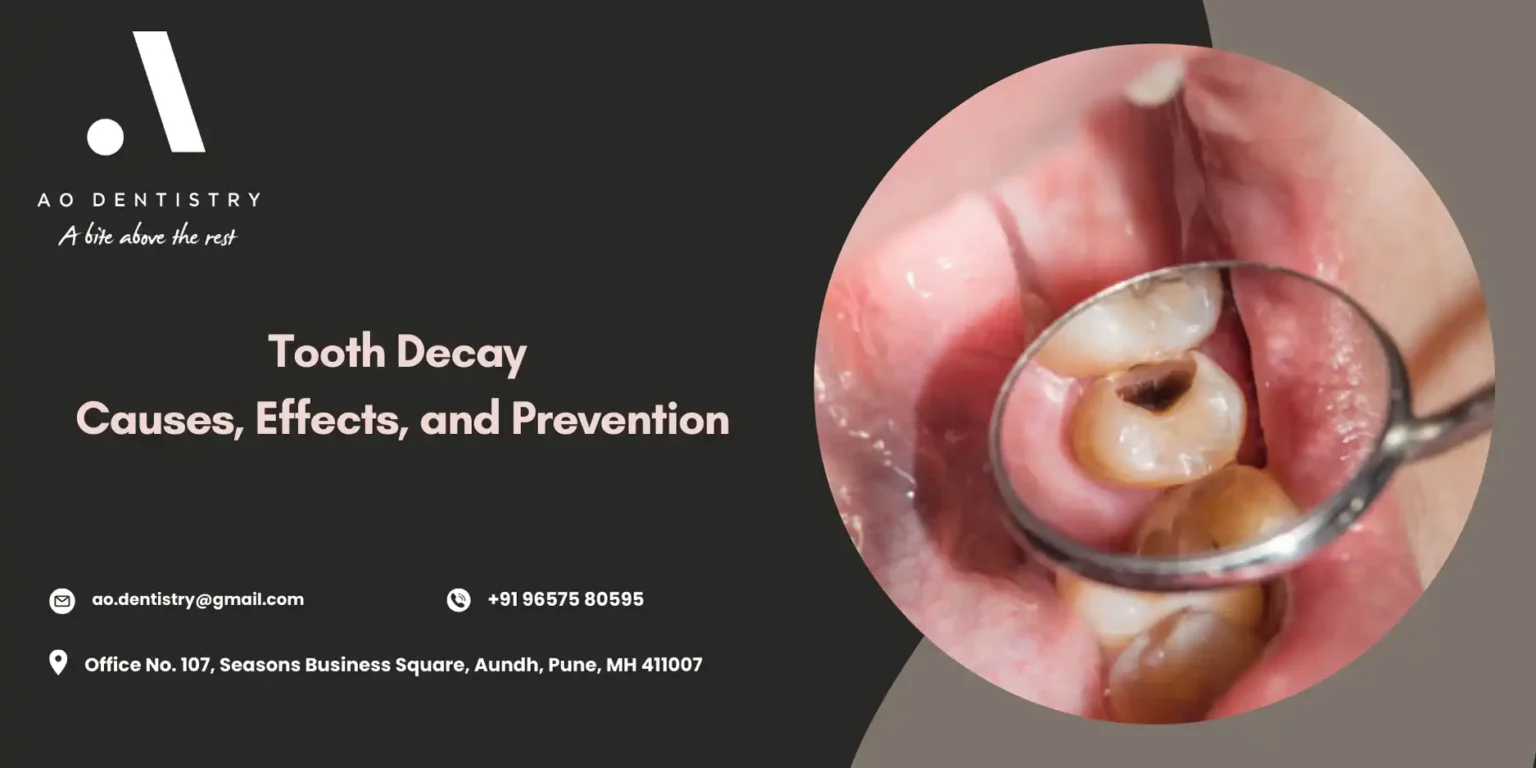
Dental cavities are not rare problems. 1 in 4 adults ages 20 to 64 years have had untreated decay. Yet many people only start paying attention when discomfort begins or when a dentist points it out during a routine visit.
It often starts small. A slight sensitivity. A dark spot you are not sure about. Then one day the thought hits hard: my tooth has a hole and it hurts. At that point, confusion and worry take over. What caused this? Could it have been avoided? Is it serious?
Read this blog to understand what cavities and tooth decay really are, why they happen, how they progress, and what can be done to stop them early.
What Are Cavities and Tooth Decays?
Cavities and tooth decay are closely related, but they are not exactly the same thing. Tooth decay is the ongoing process where acids and bacteria damage the tooth structure. A cavity is the visible result of that process, usually seen as a hole or soft area in the tooth.
Tooth decay does not appear overnight. It begins when bacteria in the mouth feed on sugars and starches from food. These bacteria release acids that slowly weaken the enamel, which is the hard outer layer of the tooth. At this early stage, the damage is silent. There is no pain, and nothing looks obviously wrong.
As the decay continues, the enamel breaks down further, allowing bacteria to move deeper into the tooth. This is when cavities start forming. The process is slow, quiet, and easy to miss until symptoms appear.
How Cavities Develop Over Time Inside the Tooth
Cavities follow a predictable pattern. Knowing this timeline helps explain why pain often comes late and why early treatment matters.
Stages of Tooth Decay and Common Symptoms
|
Stage of Decay |
What Happens Inside the Tooth |
Common Symptoms |
|
Early demineralization |
Enamel loses minerals due to acid attack |
White chalky spots, no pain |
|
Enamel breakdown |
Small holes begin forming in enamel |
Mild sensitivity |
|
Dentin involvement |
Decay reaches softer inner layer |
Sensitivity to hot or cold |
|
Pulp infection |
Nerves and blood vessels affected |
Toothache due to cavity |
|
Abscess formation |
Infection spreads beyond the tooth |
Severe pain, swelling |
Pain appears late because enamel has no nerves. When decay reaches dentin and pulp, the nerves respond, and discomfort becomes noticeable.
Early Demineralization and White Spots
This is the earliest stage of tooth decay. Minerals are lost from enamel, often showing up as white spots. At this stage, damage can still be reversed with proper care and fluoride.
Enamel Breakdown and Dentin Involvement
Once enamel breaks down, bacteria move faster through dentin. Dentin is softer and more sensitive. This is when people start noticing sensitivity, especially to cold drinks or sweet foods.
Pulp Infection and Abscess Formation
When decay reaches the pulp, nerves become inflamed. Pain becomes persistent and intense. This is the stage where people say my tooth has a hole and it hurts and seek urgent care.
What Causes Cavities and Tooth Decay Most Commonly
Tooth decay does not happen randomly. It develops when certain daily habits and biological conditions repeat over time, allowing bacteria to weaken tooth enamel and progress deeper into the tooth.
Poor Oral Hygiene Habits
- Infrequent brushing allows plaque to stay on teeth longer
- Skipping flossing leaves food trapped between teeth
- Plaque buildup protects bacteria that produce harmful acids
- Learning proper flossing techniques helps reduce decay between teeth
Frequent Sugar and Acidic Food Intake
- Sugary foods feed bacteria that cause cavities
- Acidic drinks soften enamel and make it easier to damage
- Frequent snacking keeps acid levels high throughout the day
- This pattern is one of the leading causes of cavities
Lack of Fluoride Exposure
- Fluoride strengthens enamel and slows acid damage
- Low fluoride makes teeth more vulnerable to decay
- Enamel without fluoride repairs itself more slowly
Dry Mouth and Reduced Saliva Flow
- Saliva neutralizes acids and washes away bacteria
- Reduced saliva allows bacteria to stay active longer
- Dry mouth significantly increases the causes of tooth decay
Which Teeth Are Most Prone to Cavities
In routine dental checkups, dentists notice clear patterns in where cavities tend to form first. These patterns help explain why some people suddenly feel my tooth has a hole and it hurts, even when they believe they are brushing regularly.
- Back teeth used for chewing: Molars and premolars have multiple grooves and uneven surfaces designed for grinding food. These areas easily trap food particles and plaque, making them one of the most common causes of cavities seen in dental practice.
- Teeth with deep pits and natural grooves: Some teeth are shaped with deeper pits than others. Plaque settles into these areas and is difficult to remove with a toothbrush, allowing decay to develop quietly over time.
- Spaces between teeth: Even with regular brushing, the narrow spaces between teeth are hard to clean thoroughly. Food and bacteria remain trapped here longer, which explains why cavities are often found between teeth during X ray examinations.
- Exposed roots due to gum recession: When gums recede, the softer root surface becomes exposed. Unlike enamel, this area decays faster, increasing the risk of cavities and sudden pain.
Dentists often diagnose cavities in these high risk areas first because they are harder to keep clean consistently.
Who Is More Likely to Get Cavities
Cavities do not affect everyone in the same way. Dentists often see clear patterns based on age, oral conditions, and daily habits that quietly increase the risk of tooth decay over time.
Children and Teenagers
Cavities are common in younger age groups because developing brushing habits are often inconsistent. Frequent snacking, sugary drinks, and inadequate cleaning after meals allow plaque to remain on teeth longer. Since early decay does not cause pain, cavities often go unnoticed until they become larger.
Older Adults with Receding Gums
As gums recede with age, the tooth roots become exposed. These root surfaces lack the protective enamel layer and decay much faster. This makes older adults more prone to cavities even if they maintain good oral hygiene.
People with Dry Mouth or Medical Conditions
Saliva plays a key role in neutralizing acids and repairing early enamel damage. Reduced saliva flow, often caused by medications or medical conditions, allows acids to stay active longer, accelerating the causes of tooth decay.
Individuals with Past Dental Restorations
Older fillings and crowns can develop tiny gaps at the edges. Plaque easily collects in these areas, allowing decay to form underneath existing dental work without obvious warning signs.
Smokers and Tobacco Users
Smoking reduces saliva flow and weakens the mouth’s natural protective mechanisms. With less saliva to neutralize acids and wash away plaque, tooth decay progresses faster and is easier to miss.
What Are the Early Signs and Symptoms of Tooth Decay
Tooth decay does not feel the same at every stage. Symptoms change as damage moves deeper into the tooth, which is why many people ignore early warning signs and only react once pain begins. Understanding this progression helps explain when decay is still manageable and when urgent care is needed.
When Decay Affects Only Enamel
- White or chalky spots on the tooth surface
- No pain or discomfort
- Slight roughness that may be felt with the tongue
- Early damage that is often missed without a dental checkup
When Dentin Is Involved
- Sensitivity to cold, sweet, or acidic foods
- Discomfort while chewing
- Intermittent toothache due to cavity
- Pain that comes and goes rather than staying constant
When the Nerve Is Affected
- Constant or throbbing pain that worsens at night
- Pressure or swelling around the tooth
- Difficulty sleeping due to discomfort
At this point, people often search for ways to stop tooth sensitivity, but professional evaluation is usually required to prevent further damage.
How Dentists Diagnose Cavities and Tooth Decay
Dentists do not rely on guesswork when identifying cavities. Tooth decay can begin in areas that are not visible or painful, so diagnosis involves a careful combination of clinical examination and diagnostic tools to understand how deep the damage goes.
Visual Examination and Probing
During an examination, dentists closely inspect each tooth for changes in color, texture, or shape. Special dental instruments are gently used to check for softened or sticky areas on the tooth surface. These changes often signal early decay, even when no pain is present. This step helps identify cavities that are already forming on visible surfaces.
Role of Dental X Rays
Dental X rays play a crucial role in detecting cavities that cannot be seen directly. They help reveal decay between teeth, beneath old fillings, or below the enamel surface. These hidden areas are common sites where cavities develop quietly, which is why X rays are essential even when teeth look healthy from the outside.
Why Some Cavities Are Not Visible
In the early stages, tooth decay often develops beneath the enamel or between tightly spaced teeth. Because enamel can appear intact while damage progresses underneath, cavities may not be visible or painful right away. Regular dental checkups allow dentists to catch these hidden problems early.
How Cavities and Tooth Decay Are Treated
Treatment for cavities is not the same for everyone. Dentists choose the approach based on how deep the decay has spread and how much of the tooth structure is still healthy. The earlier decay is treated, the simpler and more comfortable the solution usually is.
|
Stage of Decay |
Common Treatment |
What the Treatment Achieves |
|
Early decay |
Fluoride therapy |
Strengthens weakened enamel and slows further damage |
|
Enamel or dentin cavities |
Fillings |
Removes decay and restores tooth shape and function |
|
Pulp involvement |
Root canal |
Clears infection while preserving the tooth |
|
Severe damage |
Extraction |
Stops infection from spreading to surrounding areas |
In the early stages, fluoride treatments may be enough to strengthen enamel and stop decay from progressing. Once a cavity forms, the decayed portion of the tooth is removed and sealed using fillings. Modern options like tooth-coloured fillings blend naturally with the tooth and restore normal chewing comfort.
When decay reaches the inner pulp, pain becomes more intense and persistent. At this stage, procedures such as root canal treatment in pune help remove infection while allowing the tooth to remain functional.
Many people search for ways to remove cavity from teeth on their own, but once decay has created a hole, professional treatment is the only way to stop pain, prevent infection, and protect surrounding teeth
Can Cavities Be Reversed or Healed Naturally
Many people wonder if a cavity can heal on its own, especially when there is no pain yet. The answer depends on how early the damage is caught and how deep the decay has spread.
- Early enamel weakening can sometimes be corrected with fluoride and better oral care
- Once decay reaches the inner layers of the tooth, treatment is needed to stop it
- A hole in the tooth will not close or repair itself without dental care
- Pain or ongoing sensitivity usually means the damage has gone beyond the early stage
- Waiting too long increases the chances of infection and more involved treatment
How to Prevent Cavities and Tooth Decay Effectively
Preventing cavities is less about quick fixes and more about steady habits that protect teeth every day. Small, consistent actions make a bigger difference than occasional treatments.
Daily Oral Hygiene Habits
- Brush twice a day to remove plaque before it hardens
- Floss daily to clean areas a toothbrush cannot reach
- Pay attention to the gumline and back teeth where decay often starts
Dietary Control and Snacking Patterns
- Reduce how often sugary or starchy foods are eaten
- Avoid constant snacking that keeps acids active on teeth
- Allow time between meals so enamel can recover naturally
Fluoride Use and Professional Cleanings
- Fluoride helps strengthen enamel and slow early decay
- Regular professional teeth cleaning removes hardened plaque that home care cannot
Lifestyle Factors Like Smoking and Hydration
- Smoking increases cavity risk by reducing saliva
- Drinking enough water supports natural mouth cleansing
- Address dry mouth early to lower the chances of decay
When Should You See a Dentist for Cavities
Caries progression is often asymptomatic in its early stages, which is why timing matters. A dental evaluation is recommended once changes suggest that enamel integrity may be compromised.
Clinical Signs That Require Assessment
Persistent thermal sensitivity, discomfort during mastication, visible enamel discoloration, cavitated surfaces, or recurrent toothache usually indicate that decay has progressed beyond superficial enamel involvement.
Why Delayed Intervention Increases Risk
Untreated caries continue to advance toward dentin and pulp. As lesion depth increases, treatment shifts from conservative restorations to more invasive procedures, along with higher risk of pulpal involvement and infection.
Importance of Preventive Dental Examinations
Routine examinations allow early identification of non-cavitated lesions and interproximal decay. Detecting caries at this stage supports minimally invasive treatment and better long-term tooth preservation.
Why Early Treatment Makes a Big Difference
The stage at which tooth decay is treated directly affects the outcome. Early intervention focuses on preserving enamel and dentin, while delayed care often shifts treatment toward managing infection and structural loss. This difference impacts comfort, cost, and long-term tooth survival.
|
Early Intervention |
Delayed Intervention |
|
Small, localized cavity |
Deep carious lesion |
|
Simple restorative filling |
Root canal therapy or extraction |
|
Minimal discomfort |
Persistent pain or acute toothache due to cavity |
|
Lower treatment cost |
Higher financial and clinical burden |
|
Natural tooth structure preserved |
Increased risk of tooth loss |
Frequently Asked Questions About Cavities and Tooth Decay
1. What is the main cause of cavities?
Cavities form when acids produced after eating sugars and starches slowly break down tooth enamel. This process, called demineralization, happens inside dental plaque. Over time, repeated acid attacks weaken enamel and create holes if the damage is not repaired early.
2. Can a cavity go away on its own?
A cavity can only reverse at the very beginning, before a hole forms. Early enamel damage, often seen as white spots, may recover through remineralization with fluoride and saliva. Once decay breaks through enamel and reaches dentin, the tooth cannot heal without dental treatment.
3. Do cavities always cause pain?
No, cavities often develop without pain at first. Tooth enamel has no nerves, so decay can spread quietly. Pain is a late-stage symptom and usually begins when decay reaches the sensitive dentin or the nerve area inside the tooth.
4. How fast does tooth decay progress?
Tooth decay usually develops slowly, taking months or even years in adults. The speed depends on factors like diet, oral hygiene, fluoride use, and saliva flow. Frequent sugar intake or dry mouth can accelerate decay, while good daily care helps slow it down.
5. How often should I check for cavities?
Most people should have a dental checkup every six months to catch cavities early. Those with higher risk, such as dry mouth or frequent snacking, may need more frequent visits. At home, watching for white spots or dark areas can help spot early changes.