

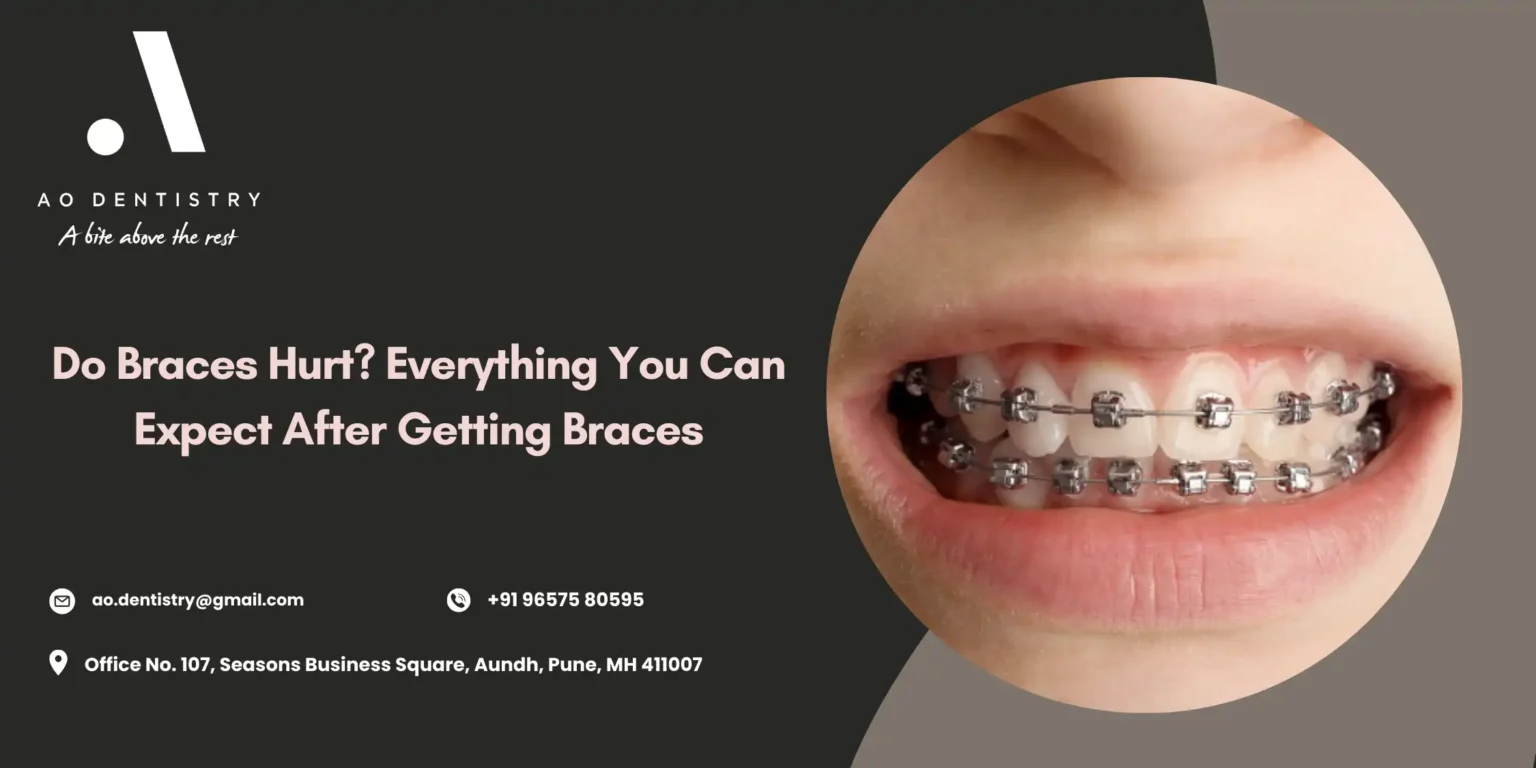
So you’re looking at getting braces and that question just keeps coming back, right? Will braces hurt? Or do braces hurt? That’s what everybody wants to know.
Here is the answer for all your questions, yes your teeth will be sore, but it’s not a terrible thing that will ruin your life. The soreness kicks in after a few hours, it gets worse for a day or so, then it starts getting better. By day five or six, most people feel way different. After a week you’re basically back to normal. A lot of people also wonder do getting braces off hurt or will getting braces hurt, which is a totally different experience.
Worried about root canal pain? Read Is RCT Painful.
Aligners vs Braces: Which Is the Best Option for Your Smile? Read more here
Do Braces Really Hurt?
So will braces hurt? I mean, yeah, they do cause discomfort. That’s just… that’s just the reality. But here’s the thing nobody tells you it’s way less intense than what most people think it’s gonna be. The will braces pain part? That’s not what happens. It’s more like this pressure feeling, mixed with soreness. Like something’s pushing on your teeth. That’s it, basically.
Think about the sensation. When pressure is being applied to your teeth, they ache. Not a sharp sting. More like a dull, persistent tenderness. Your jaw might feel stiff. Your gums might feel sore. The best comparison? It’s similar to muscle soreness after you’ve done something physically demanding, except it’s in your mouth. You can feel it, you’re aware of it, but you’re not incapacitated.
Myths surround braces. People swap horror stories. The internet makes everything sound dramatic. Reality? It’s far less severe. Yeah, braces create discomfort. But discomfort that lasts days, not months. Later on, do getting braces off hurt is something patients think about, but removal is actually painless.
Here are a few home remedies for swollen gums
What to Expect When Getting Braces
Most people wonder will braces hurt during the actual appointment, and the answer is no. So when you go in for that first appointment, here’s basically what happens. Your orthodontist, the first thing they do is clean your teeth really thoroughly. They need to get everything clean because the brackets won’t stick right if your teeth are dirty.
Once everything’s dry and clean, they put this special adhesive on your teeth, and then they carefully put those small brackets on each tooth. Once all the brackets are positioned, they take the archwire that’s the metal wire that’s going to do most of the work and thread it through the brackets. Then they secure it with little elastic bands or sometimes small metal ligatures. And that’s it, basically. Your braces are now active and working.
During all this? Will braces pain ? You’re not experiencing pain. It’s not painful at all, actually. You might feel the tools in your mouth, sure. You might notice some temperature sensitivity from all the cleaning. Maybe a little bit of pressure from the tools themselves. But that’s not a pain. It’s just a sensation. The pain part, or actually the soreness part that doesn’t show up until later. It starts a few hours after you leave the office. Your teeth start responding to the pressure, and that’s when the soreness kicks in.
How to Use Mouthwash. Click here
Do Braces Hurt in the First Week?
Days one through seven are when discomfort peaks. Your mouth is adjusting to foreign objects. The bone around your teeth is beginning to remodel. All of this creates soreness. How much soreness? That depends on several factors. Your individual pain threshold matters. The extent of correction needed matters. Someone needing minor tooth movement experiences different discomfort than someone whose bite needs significant overhaul.
Here’s what people usually report:
- Your teeth feel achy and sore, like when you chew or bite down it’s uncomfortable
- Your jaw muscles are tense and achy because of all that constant tension
- The inside of your cheeks and lips feel raw where the brackets rub on them
- Your teeth are super sensitive to hot and cold stuff it’s like everything feels intense
- Your whole mouth feels like it’s under pressure, like something’s constantly pushing
- Your gums might swell a little bit, though honestly it’s usually not a huge amount
Now here’s the good part. If you’re still thinking will braces hurt more than you can handle, keep reading. Around day three or four, people start noticing they feel better. By day four, the soreness actually starts going down pretty noticeably. Days five and six are way better. And by the time you get to day seven? Most people feel like a totally different person. Your mouth adapts to it, the cells do their thing, and suddenly the pressure just feels normal.
Stop cavities early with these Tooth Decay tips. Click here.
Braces Tightening: Does It Hurt?
Every four, five, six weeks or so depending on your case you gotta go to the clinic. They look at how your teeth have moved, and then they tighten things up. They might tighten the archwire, replace it with a different one that’s got more tension. Maybe swap out the elastics. They’re making these little changes to keep the whole process moving forward. You need these appointments for the braces to actually work.
So does it hurt? Well, kinda. It creates soreness, yeah. But not right during the appointment there’s no pain while your orthodontist is working on you. It’s after you leave that it starts. You might feel it kick in like an hour after you get home. Then it builds up over a few hours. It peaks around, like, twelve to twenty-four hours after the adjustment. After that it starts getting better. Usually by the second day after your appointment, so like forty-eight hours in, most people are feeling way better.
The good thing is you get used to it. After you’ve had like two or three adjustments, you know what’s coming, and it doesn’t feel as bad. Your body remembers. The soreness from your third or fourth appointment is usually less intense than when they first put the braces on.
See what’s safe to eat after a Tooth Extraction.
How Long Does Braces Pain Last?
So how long will your teeth actually hurt after you get braces? Okay, let me just break down the timeline. Days one and two? Those are the toughest days. The soreness is at like, peak level during that time. But then day three comes and you start noticing, “Oh, it’s getting a little better.” Day four, day five things are improving noticeably. By day six most people are like, “Okay, this is manageable now.” And then by the end of the first week? A lot of people feel mostly normal. There might be a little bit of tenderness still, but it’s way better than before.
The thing is, everybody’s different. Some people recover in like three or four days. Others take like, ten days. Both of those are totally normal. There’s not, like, some rule about how long it should take. Your body heals on its own timeline. The duration of will braces pain varies, but rarely extends past the first week.
Here are a few ways to Stop Grinding Teeth Naturally.
How to Manage Braces Pain
What actually reduces discomfort? Several proven strategies exist. These aren’t theoretical. People use them successfully all the time.
Wax Prevents Bracket Irritation
Those brackets contact your inner cheeks and lips. Contact creates friction. Friction causes sores. Wax fixes this. Apply a small amount to the offending bracket. The irritation stops. Simple intervention, major comfort improvement.
Cold Applications Work
Cold reduces inflammation. Cold also numbs. Eat smoothies. Try yogurt. Have ice cream. Choose pudding. These foods are soft, which means minimal chewing is required. They’re cold, which reduces swelling and discomfort. They provide nutrition. Bonus: they taste good.
Soft Foods Decrease Pressure
Skip hard foods for a week. Mashed potatoes work. Soup works. Pasta works. Scrambled eggs work. Soft vegetables work. These require minimal jaw effort. Your teeth and supporting tissues don’t experience strain. Once soreness decreases, gradually reintroduce harder foods.
Over-the-Counter Medication Helps
Ibuprofen works. Acetaminophen works. Both reduce inflammation and pain. Take them right after placement or after adjustments. Follow package instructions. Medication is most effective within the first forty-eight hours. Most people find relief continues for several hours after taking it.
Saltwater Reduces Inflammation
Mix salt and warm water. Rinse multiple times daily. This reduces gum inflammation. This aids healing of irritated tissue. It’s economical. It’s effective. It’s worth doing.
Certain Foods Cause Problems
Hard nuts? Skip them. Sticky candy? Avoid it. Caramel? Not now. Gum? Absolutely not. These foods either damage brackets or cause unnecessary pain. There’s no upside to eating them during treatment.
Find out common Yellow Teeth Causes and fixes.
Factors That Affect Braces Pain
Why does one person experience mild soreness while another struggles more? Multiple variables influence the experience.Understanding these factors helps explain why will braces hurt differently for different people. Pain tolerance is one. Genetically, some individuals process discomfort differently. Biology plays a role.
The scope of correction needed is another. Significant bite issues require more aggressive pressure. More pressure creates more soreness initially. Minor alignment adjustments need less force. Less force means gentler discomfort. It’s straightforward, bigger changes equal bigger sensations.
Age enters the picture too. Younger patients sometimes report different experiences than adults. Research hasn’t conclusively proven one age group suffers more. Both kids and adults successfully complete orthodontic treatment. Neither group finds it prohibitively painful.
Individuals with healthy gums before starting treatment often experience less irritation. Poor oral hygiene leads to sensitive, inflamed gums before braces even begin. Those gums become more reactive to pressure. Taking care of your teeth beforehand actually reduces discomfort during treatment.
Mouth sensitivity varies person to person. Some people have inherently tender gums and teeth. Others have tougher tissues. Genetics determines much of this. Your sensitivity level influences your experience, but doesn’t prevent success.
Braces vs Aligners: Which Hurts More?
People ask like, how do clear aligners compare to braces in terms of soreness? Which one hurts more? The answer’s kind of like… it’s pretty similar, honestly. Some people say aligners are a tiny bit less uncomfortable. Why’s that? Well, with aligners you get a new set like every week or two. So the pressure builds up gradually over time. It’s not like this sudden tightening like with fixed braces. You don’t get that concentrated force hitting all at once.
But here’s the thing about aligners they only work if you actually wear them. You gotta keep them in your mouth. If they’re sitting on your nightstand, they’re not doing anything. Braces are different. You put them on and they just work. Twenty-four seven. No effort on your part except just wearing them.
So which one should you pick? That really depends on what matters to you. Do you want something simple that you don’t have to think about? Braces are your thing. You want something removable and less visible? Aligners might be better. Both of them work. Both create some soreness. Whether you choose braces or aligners, will braces pain be something you can handle depends on preparation
Explore different Types of Crowns for Teeth here.
FAQs
Q1. How long will my teeth hurt after getting braces?
Ans. Peak soreness occurs during the first two to three days. Improvement becomes evident by day four or five
Q2. How painful is it to get braces?
Ans. During the actual placement appointment? No pain occurs. Pressure and tool sensations register, but pain doesn’t. After you leave? Soreness develops. It builds gradually over several hours. Most intense during the initial forty-eight hour window.
Q3. Does ice cream help brace pain?
Ans. Yes. Cold reduces inflammation. Cold numbs sensation. The combination of cold plus soft texture addresses soreness effectively.
Q4. Can I take paracetamol for braces pain?
Ans. Definitely, Both paracetamol and ibuprofen reduce braces-related soreness.
Q5. How do I make braces stop hurting?
Ans. Definitely. Both paracetamol and ibuprofen reduce braces-related soreness. Most soreness go away on its own within three to seven days
Q6. Is braces pain worse for adults than kids?
Ans. Soreness levels between age groups are fairly comparable. Some evidence suggests adults might experience slightly more initial discomfort. However, neither group finds braces prohibitively painful. Both manage treatment successfully.
Q7. Every patient wonders do braces hurt after getting them on or will braces
Ans. damage my teeth, but there’s no universal answer. The experience really depends on what’s happening with your mouth, how sensitive you are, and what kind of treatment you’re getting. What works for one person might feel totally different for someone else.